
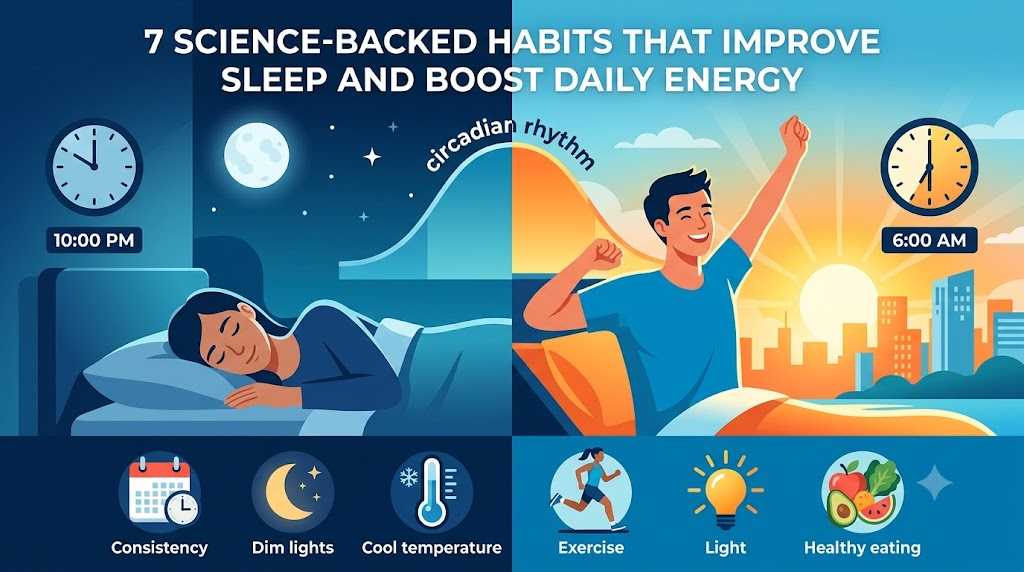
Quality sleep is not merely a passive state of rest; it is an active, vital physiological process essential for cognitive function, metabolic balance, immune repair, and emotional stability.
Chronic sleep deprivation elevates systemic inflammation, impairs glucose tolerance, and accelerates cellular aging. Implementing evidence-based sleep hygiene practices helps align your body’s natural circadian rhythms and supports sustainable daytime energy.
1. Maintain a Consistent Sleep-Wake Schedule
Your body operates on a central circadian clock located in the suprachiasmatic nucleus (SCN) of the hypothalamus.
Going to bed and waking up at the same time every day—including weekends—helps anchor your internal biological clock. This regularity optimizes:
- Night-time melatonin release
- Daytime cortisol secretion
- Reduced “social jetlag” and morning grogginess
2. Create a Dedicated Wind-Down Routine
Transitioning from daytime alertness to restful sleep requires a deliberate buffer period.
Blue light from smartphones, tablets, and televisions suppresses melatonin production, making it harder to fall asleep.
During the final 60–90 minutes before bed:
- Dim indoor lights.
- Read a physical book.
- Practice gentle stretching or relaxation exercises.
- Avoid screens whenever possible.
3. Optimize Your Sleep Environment
Thermoregulation plays a key role in sleep onset.
Your core body temperature naturally drops by approximately 1°C (2°F) to initiate deep, restorative sleep.
For optimal sleep:
- Keep your bedroom between 15°C and 19°C (60°F–67°F), with around 18°C being ideal.
- Use blackout curtains or an eye mask.
- Use white noise if environmental noise is disruptive.
4. Time Caffeine and Evening Meals Wisely
Caffeine blocks adenosine receptors in the brain, masking fatigue rather than eliminating it.
Because caffeine has a half-life of 5–7 hours, consuming it after 12:00 PM may reduce deep sleep.
Also avoid heavy, spicy, or high-fat meals within three hours of bedtime, as digestion raises body temperature and may cause nighttime awakenings.
5. Get Morning Sunlight and Exercise Regularly
Exposure to bright natural sunlight within 30 minutes of waking helps:
- Boost morning alertness.
- Support a healthy cortisol rhythm.
- Regulate evening melatonin production.
Regular exercise improves sleep quality and depth. However, complete high-intensity workouts at least four hours before bedtime to avoid elevated adrenaline and body temperature interfering with sleep.
The 20–30 Minute Nap Rule
If you feel tired during the day:
- Limit naps to 20–30 minutes.
- Nap between 1:00 PM and 3:00 PM.
Longer naps increase the likelihood of entering deep sleep, leading to sleep inertia (grogginess) and making it more difficult to fall asleep at night.
Key Implementation Steps
- Set a consistent wake-up time and follow it seven days a week.
- Enforce a 60-minute digital curfew before bedtime.
- Keep your bedroom cool (around 18°C), dark, and quiet.
- Stop consuming caffeine after 12:00 PM each day.
Better sleep is not simply about getting more hours of rest—it is about creating the right conditions for your body and brain to recover, repair, and perform at their best every day.