
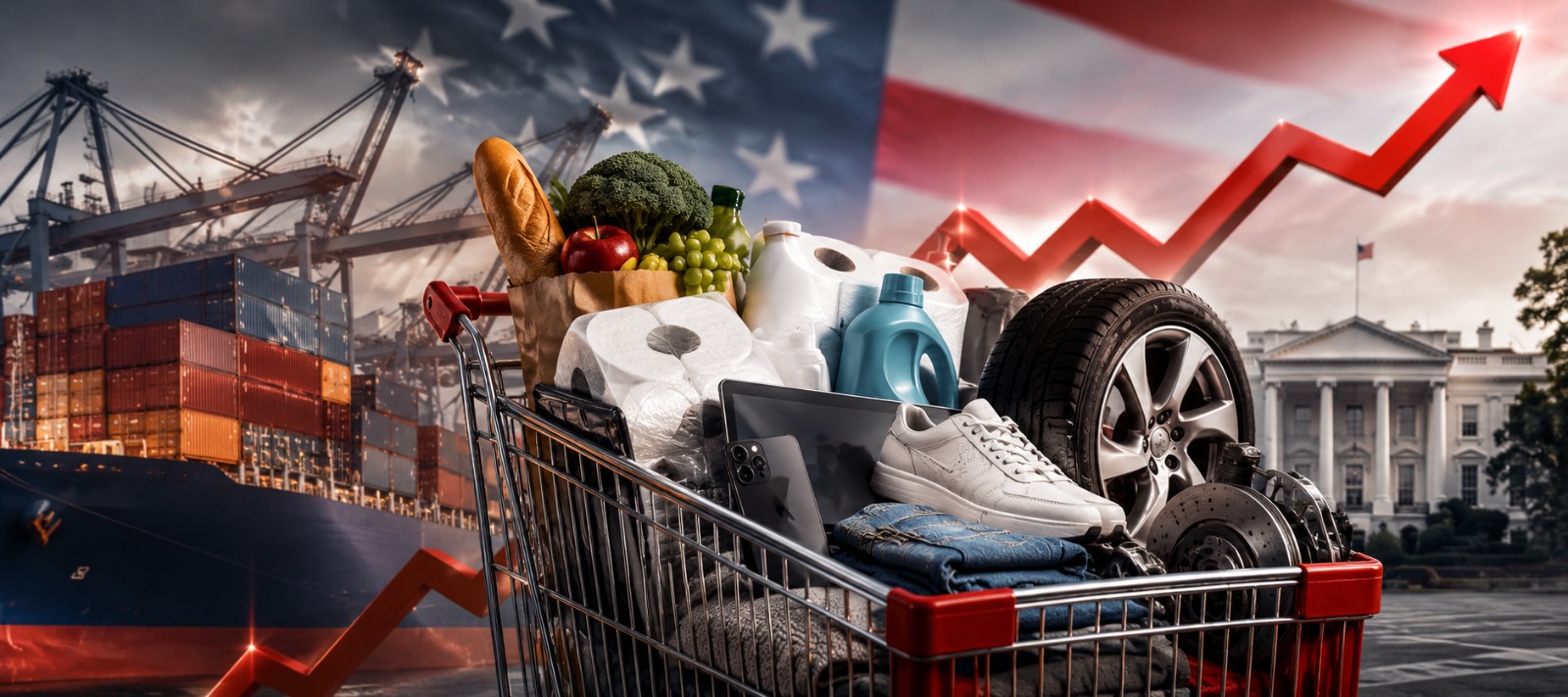
The latest Trump tariffs 2026 have officially taken effect, renewing concerns that Americans could soon pay more for imported consumer products.
On July 24, 2026, the United States introduced new tariffs of 10% and 12.5% on imports from 60 trading partners. The affected economies include major U.S. suppliers such as China, Canada, Mexico, India, Japan, South Korea, Vietnam and the European Union.
According to the Office of the U.S. Trade Representative, the measures cover trading partners responsible for approximately 99.4% of U.S. imports. However, numerous products—including certain essential raw materials, energy products and goods that cannot be supplied sufficiently within the United States—have been exempted.
The new tariffs do not mean that every imported product will immediately become 10% or 12.5% more expensive. The final impact will depend on a product’s country of origin, existing import duties, exemptions, retailer inventory and how much of the additional cost businesses pass on to customers.
Still, several everyday product categories could face greater price pressure in the coming weeks and months.
What Are the New Trump Tariffs in 2026?
The latest tariffs were introduced under Section 301 of the Trade Act of 1974.
The Trump administration says the measures are a response to countries that have failed to introduce or effectively enforce restrictions against products made with forced labor.
Countries that have adopted forced-labor import restrictions, made commitments through trade agreements or established partial prohibitions generally face a 10% tariff. Countries without sufficient restrictions generally face a 12.5% rate.
The new duties replaced a temporary 10% global import surcharge that expired at 12:01 a.m. EDT on July 24, 2026. Because many imported goods were already subject to that temporary 10% surcharge, the immediate increase for some products may be smaller than the headline tariff rate suggests.
Even so, the new system maintains a tariff floor across most U.S. imports and creates additional uncertainty for manufacturers, importers and retailers.
Who Actually Pays the Tariffs?
Tariffs are collected from U.S. companies importing foreign goods. They are not directly paid to the U.S. government by the exporting country.
An importer facing a new tariff generally has several choices:
- Absorb the additional expense
- Ask the overseas supplier to reduce its price
- Move production to another country
- Reduce discounts or product options
- Pass some or all of the cost to customers
In practice, the cost is often shared across manufacturers, importers, retailers and consumers.
Federal Reserve research on tariffs introduced during 2025 found that price effects developed gradually instead of appearing as one immediate increase. Another Federal Reserve analysis estimated that the earlier tariffs had raised core goods prices and that the cost had substantially passed through to consumers over time.
This means shoppers may not notice the full effect of the new Trump tariffs immediately. Price changes may become more visible as businesses replace older inventory with newly imported merchandise.
Products Affected by Trump Tariffs That Could Cost More
The exact impact will vary by brand, supplier and product classification. However, import-dependent categories are generally more exposed to tariff-related costs.
1. Shoes and Footwear
Shoes are among the products most likely to experience additional price pressure.
A large portion of footwear sold in the United States is manufactured overseas, particularly in China, Vietnam, Indonesia, Cambodia and other Asian economies covered by the latest tariffs.
Many footwear products were already subject to standard import duties before the latest measures were introduced. The addition of another tariff can increase costs for athletic shoes, children’s footwear, work boots, sandals and fashion shoes.
The Bureau of Labor Statistics reported that footwear prices in June 2026 were already 4.1% higher than a year earlier. Industry representatives have also said manufacturers were increasing prices charged to retailers in anticipation of new tariffs.
Retailers may initially rely on products imported before July 24. However, newly manufactured collections and replacement inventory could arrive at higher costs.
2. Clothing and Apparel
Imported clothing is another category that may be affected by Trump tariffs 2026.
The United States sources large quantities of clothing from countries such as China, Bangladesh, Vietnam, India, Indonesia and Cambodia. Products that do not qualify for exemptions may face the new tariff in addition to existing customs duties.
Potentially affected items include:
- T-shirts and casual clothing
- Jeans and trousers
- Dresses
- Jackets and outerwear
- Children’s clothing
- Sportswear
- Fashion accessories
Discount retailers and fast-fashion brands may be especially sensitive because they often compete on low prices and operate with limited profit margins.
Instead of increasing prices by the full tariff amount, some companies may reduce sales, use lower-cost materials or introduce fewer styles.
3. Smartphones, Laptops and Electronics
Consumer electronics rely heavily on international manufacturing and complex global supply chains.
A smartphone may be assembled in one country while containing processors, batteries, displays, cameras and memory components produced in several others. This makes technology products vulnerable to tariffs applied at different stages of production.
Products that could face higher costs include:
- Smartphones
- Laptops and tablets
- Televisions
- Gaming consoles
- Smartwatches
- Headphones and earbuds
- Computer accessories
- Smart-home devices
- Chargers and power banks
The Consumer Technology Association reported that tariff expenses paid by U.S. technology importers increased sharply during 2025. Its research covers categories including smartphones, laptops, gaming consoles, televisions, digital-health devices and smart-home products.
Not every electronic product will receive an immediate price increase. Larger companies may negotiate with suppliers, change manufacturing locations or temporarily accept smaller profit margins. Smaller brands may have fewer options.
4. Furniture and Home Décor
Furniture is another import-heavy consumer category.
The United States imports beds, mattresses, tables, chairs, cabinets, desks and decorative products from several countries affected by the latest tariffs.
Possible price increases could affect:
- Bedroom furniture
- Dining tables and chairs
- Sofas and seating
- Office desks
- Mattresses
- Bookshelves
- Outdoor furniture
- Lamps and home décor
Furniture prices may take longer to change because retailers often order products months before they reach stores. Existing stock may continue selling at current prices, while later shipments could reflect higher import expenses.
National Retail Federation research has repeatedly identified furniture as one of the consumer categories particularly exposed to broad import tariffs. The study examined different proposed tariff levels, so its specific price estimates should not be applied directly to the July 2026 measures. However, it demonstrates the category’s dependence on imported goods and sensitivity to higher duties.
5. Household Appliances
Small and large household appliances may also face higher costs, depending on their origin and tariff classification.
Potentially affected products include:
- Microwaves
- Coffee makers
- Air fryers
- Vacuum cleaners
- Blenders
- Fans
- Portable air conditioners
- Washing machines
- Refrigerators
- Kitchen appliances
Appliance manufacturers may be affected by both finished-product tariffs and duties on imported components.
Some appliances also contain substantial amounts of steel, aluminum or copper. Separate U.S. tariff programs currently impose duties on certain metal products and derivatives, although selected equipment and residential heating and cooling products receive different treatment.
These overlapping tariff systems can make the final cost difficult to predict.
6. Toys and Children’s Products
Many toys sold in the United States are manufactured in China and other Asian economies included in the new tariff system.
The affected categories could include:
- Dolls and action figures
- Electronic toys
- Board games
- Puzzles
- Building sets
- Arts and crafts products
- Backpacks
- Lunch boxes
- School accessories
The timing could be important because the tariffs began during the back-to-school shopping season and several months before the year-end holidays.
Some retailers imported additional inventory before expected tariff changes. The National Retail Federation reported that cargo volumes at major U.S. ports were expected to reach a record level in July as retailers stocked up before possible tariff increases.
This early inventory may delay price increases, but businesses will eventually need to reorder.
7. Luggage and Travel Goods
Suitcases, backpacks, handbags, laptop bags and travel organizers are frequently imported from countries covered by the latest tariffs.
Travel goods can already carry significant standard import duties, depending on their materials and classification. Additional tariffs may further raise costs for importers.
Products that could be affected include:
- Carry-on luggage
- Checked suitcases
- Travel backpacks
- Laptop bags
- Handbags
- Wallets
- Toiletry bags
- Packing organizers
Retailers may respond by reducing promotions, adjusting product materials or increasing prices gradually.
8. Auto Parts and Accessories
The effect of the Trump tariff list on vehicles and automotive products is more complicated.
Certain goods receiving favorable treatment under the United States-Mexico-Canada Agreement are exempt from the latest Section 301 tariffs. Products already covered by separate national-security tariffs may also be treated differently.
However, non-exempt imported auto products could still face pressure, including:
- Replacement components
- Vehicle electronics
- Interior accessories
- Car audio equipment
- Aftermarket lighting
- Repair tools
- Selected tires and wheels
Higher component costs can eventually increase repair and maintenance expenses, even when the purchase price of a vehicle is not directly affected.
9. Home-Improvement Products and Tools
Imported tools, fixtures and household repair products may also become more expensive.
Potentially exposed products include:
- Power tools
- Hand tools
- Lighting equipment
- Plumbing fixtures
- Storage racks
- Hardware and fasteners
- Heating and cooling components
- Imported building materials
The impact will depend on whether the product is included in the latest Section 301 tariffs, covered by a separate metal tariff or listed under an exemption.
Which Products Are Exempt From the Latest Tariffs?
The new duties are broad, but they do not apply equally to every imported product.
Reported exemptions include certain:
- Oil and natural gas products
- Fertilizers
- Food products
- Critical minerals
- Essential raw materials
- Goods unavailable in sufficient domestic supply
- Products already covered by selected Section 232 tariffs
- Imports receiving favorable treatment under the USMCA
- Products included on specific exclusion lists
USTR said exemptions were designed to avoid shortages, economy-wide disruption and excessive pressure on products that cannot be produced domestically in sufficient quantities or at reasonable prices.
Reuters reported that hundreds of products were added to the exclusion list before the tariffs took effect.
Consumers should therefore avoid assuming that every item made outside the United States will become more expensive.
Will Prices Rise Immediately?
A nationwide price increase is unlikely to appear overnight.
Businesses that imported products before July 24 may continue selling that inventory at existing prices. Companies may also have fixed-price agreements with suppliers or retailers that delay changes.
Price increases are more likely to appear gradually as:
- Existing inventory is sold
- New shipments arrive
- Supplier contracts are renewed
- Manufacturing costs increase
- Companies exhaust their ability to absorb expenses
Oxford Economics told the Associated Press that the immediate change in the overall effective tariff rate may be limited because the latest duties are close to the temporary 10% surcharge they replaced.
Consumers may also experience the tariff impact in less obvious ways. Retailers could offer fewer discounts, reduce product variety, introduce smaller package sizes or charge more for delivery.
Does a 10% Tariff Mean a 10% Retail Price Increase?
Not necessarily.
A tariff is generally calculated using the customs value of an imported product, not its final store price. The retail price can also include transportation, marketing, warehousing, staff expenses and retailer margins.
The amount passed to consumers depends on factors such as:
- Competition between sellers
- Existing profit margins
- Currency exchange rates
- Supplier negotiations
- Availability of alternative countries
- Domestic production capacity
- Consumer demand
A business may absorb part of the tariff while passing the remainder to customers. In other cases, tariff-related expenses can affect imported materials used in products manufactured within the United States.
Federal Reserve research indicates that tariff-related consumer price changes can develop over several months rather than matching the announced tariff rate immediately.
How Americans Can Prepare for Higher Prices
Consumers do not need to panic-buy products because of the new tariffs.
A more practical approach includes:
- Comparing prices across multiple retailers
- Using price-tracking websites or apps
- Checking open-box and refurbished electronics
- Buying seasonal products during scheduled sales
- Comparing domestic and imported alternatives
- Reviewing warranty and repair policies
- Avoiding unnecessary replacement purchases
- Checking a product’s country of origin
- Considering reliable secondhand products
For major purchases such as appliances, furniture or computers, shoppers should consider the total value of the product rather than focusing only on the lowest advertised price.
Frequently Asked Questions
What are Trump tariffs 2026?
Trump tariffs 2026 include new duties of 10% and 12.5% on imports from 60 trading partners. The administration introduced the measures under Section 301 over concerns related to the enforcement of forced-labor import restrictions.
When did the latest Trump tariffs begin?
The latest tariffs took effect at 12:01 a.m. EDT on July 24, 2026, immediately after a temporary 10% global import surcharge expired.
What products are affected by Trump tariffs?
Non-exempt imported goods from affected economies may face the new duties. Import-dependent categories such as footwear, clothing, electronics, furniture, appliances, toys and travel goods may be more exposed, although the impact varies by product classification and country of origin.
Who pays for U.S. tariffs?
U.S. importers pay tariffs when covered products enter the country. Businesses may absorb the cost, share it with suppliers or pass part of it to consumers through higher prices.
Will all imported products become more expensive?
No. Numerous products have been exempted, and retailers may absorb some costs. Price changes will depend on inventory, competition, supplier agreements and existing tariff rates.
Could more tariffs be introduced in 2026?
Additional tariff actions remain possible because the administration is conducting other trade investigations. Any future tariff would depend on the outcome of those proceedings and subsequent government decisions.
Final Thoughts
The latest Trump tariffs 2026 represent a major change in U.S. trade policy, covering countries responsible for nearly all American imports while preserving exemptions for selected essential goods.
Shoes, clothing, electronics, furniture, household appliances, toys and travel products are among the consumer categories most likely to face additional cost pressure. However, the actual price effect will differ significantly between products.
Some businesses may absorb part of the cost, while others may increase prices, reduce discounts or change suppliers. Consumers are therefore more likely to experience gradual and uneven changes rather than an immediate universal increase.
As the new tariff system develops, Americans should compare prices carefully, avoid panic purchases and watch how retailers adjust their inventories during the back-to-school and holiday shopping seasons.