Trump Holds Open the Prospect of Renewed Iran Strikes as Mediation Push Continues
Background
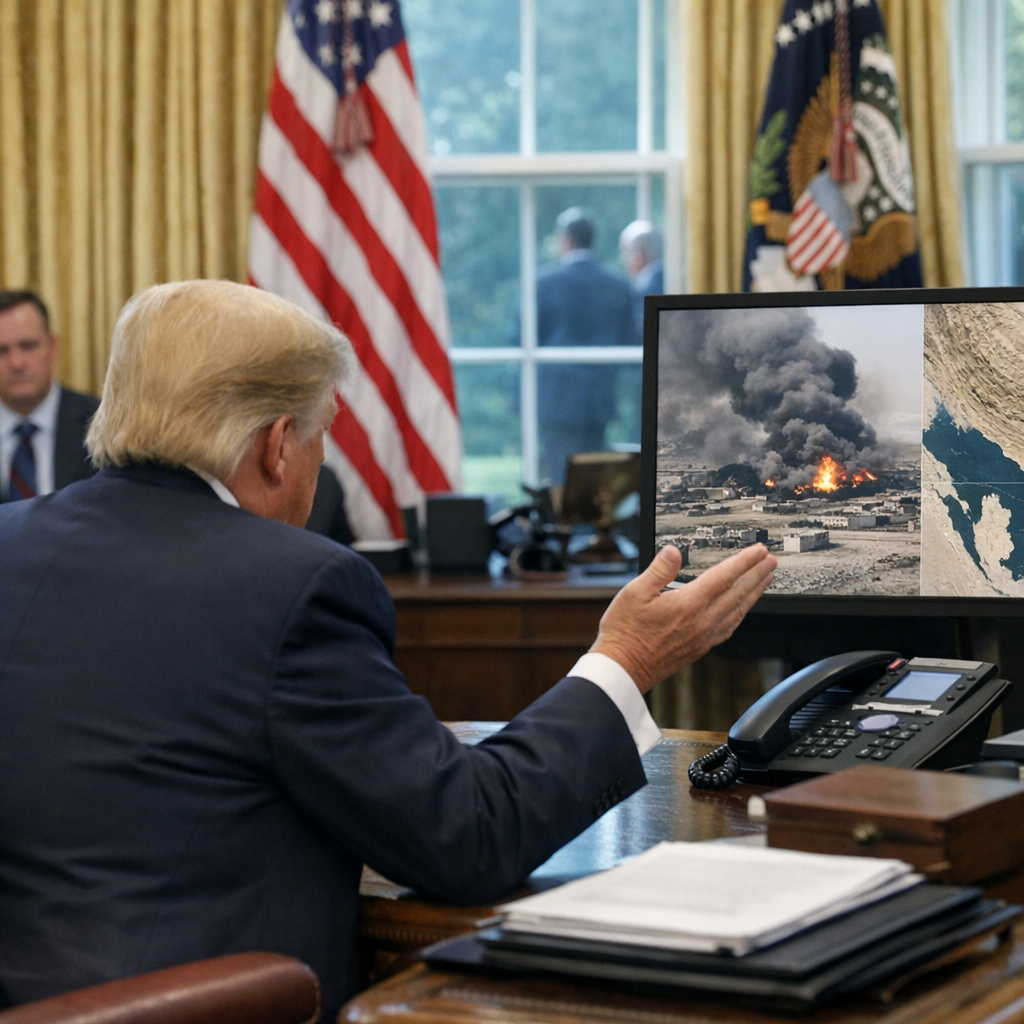
The latest diplomatic effort follows two weeks of U.S. military strikes on Iranian targets, including sites in southern Iran and areas near the Strait of Hormuz. President Donald Trump has described the pause in attacks as a temporary opportunity for negotiations rather than a permanent shift in policy, warning that the United States could resume military action if the talks fail or Iran misbehaves.
The discussions involve several issues and intermediaries. Trump has said the United States and Iran are addressing the reopening of the Strait of Hormuz and the possible restoration of negotiations on a comprehensive nuclear agreement. Iran denies that it is negotiating directly with Washington, but says intermediaries can deliver U.S. messages. Oman is leading the mediation effort with Qatar, Pakistan and Egypt, while Trump envoys Steve Witkoff and Jared Kushner are also involved. Regional sources have described progress, but no agreement has been announced.
Military pause tied to another diplomatic opening
President Donald Trump said the United States halted strikes on Iran to give negotiations an additional opportunity, while making clear that the pause did not amount to a permanent change in policy. In comments to Axios, he said Washington would resume what he described as very strong military action if the diplomatic effort does not succeed.
Axios reported that Trump directed the U.S. military to refrain from firing on Iranian targets in southern Iran and around the Strait of Hormuz, marking the first such hold in two weeks. The decision placed a temporary brake on military operations while negotiators and regional intermediaries sought to move discussions forward.
Trump’s public position combines a conditional willingness to wait with a continued threat of force. He told Bloomberg that he would not exclude a return to strikes against Iranian military sites if Iran misbehaved, underscoring that the military option remains part of the administration’s approach.
A pause, not a final settlement
The reported hold-fire order came as Trump described diplomacy as an active process rather than a completed agreement. His warnings about renewed action indicate that the administration is treating the current period as a test of whether talks can deliver results.
Strait of Hormuz and nuclear negotiations are at the center of talks
Trump told Axios that the United States and Iran were engaged in very deep talks. The discussions were focused on reopening the Strait of Hormuz and restoring negotiations toward a comprehensive nuclear agreement, linking an immediate regional concern with a broader diplomatic objective.
The Strait of Hormuz has become a central issue in the negotiations described by Trump. Reopening it is being addressed alongside the effort to restart nuclear talks, suggesting that the parties and mediators are dealing with more than one unresolved issue at a time.
Trump later told Al Jazeera that the United States was in very friendly negotiations with Iran after the previous week’s pause in military strikes. He said there was a good chance for progress, although he maintained that military operations could resume if the talks break down.
Different accounts of how contact is taking place
Iran publicly denied that it was conducting direct negotiations with Washington. It said, however, that intermediaries could convey U.S. messages, a distinction that points to the importance of mediation even as Trump characterized the diplomatic engagement in positive terms.
Regional mediators seek more time as no agreement emerges
Trump said mediators and other countries in the region had urged him to allow diplomacy more time. Regional sources told Axios that negotiations involving Oman and Iran had advanced, but they had not yet produced an agreement.
Al Jazeera reported that Oman was leading the mediation effort with Qatar, Pakistan and Egypt. The process also involved Trump envoys Steve Witkoff and Jared Kushner, bringing together multiple regional channels and U.S. representatives as the parties tried to sustain the diplomatic opening.
The absence of an announced deal leaves the process in a provisional stage. Progress has been reported by negotiators, but both Trump’s comments and accounts from regional sources show that the discussions remain short of a final outcome.
Mediation carries the diplomatic effort
With Iran saying it is not holding direct talks with Washington, the role of Oman and the other intermediaries is especially significant. Their involvement provides a route for messages and proposals while public differences over the nature of the negotiations persist.
Trump reviews a peace proposal while expressing doubt
Trump said he would consider Iran’s latest peace offer after receiving a briefing on the concept of the proposed deal. He told Bloomberg that negotiators had made progress, but he also questioned whether they would ultimately be able to reach an agreement.
That uncertainty sits alongside his statements about the potential scale of future military action. Trump told Axios that he was nearing a decision on whether to order what he called a massive attack on Iran, one he said would exceed the initial February strikes. He also said the United States was prepared to carry out such an operation.
In remarks reported by Forbes, Trump said Iran wanted to negotiate but argued that its leadership had not yet felt enough pain. The same report said Brent crude had climbed above $100 per barrel, placing the diplomatic and military uncertainty against a backdrop of higher oil prices.
Pressure and diplomacy proceed in parallel
Trump’s comments outline two possible paths: further time for an emerging diplomatic proposal or a return to military action. While he has pointed to progress and a possible chance of success, his stated doubts and readiness for a larger operation keep the prospect of escalation in view.
Timeline
- Over the preceding two weeks: The United States carried out military strikes against Iranian targets, including areas in southern Iran and around the Strait of Hormuz.
- Previous week: A pause in U.S. military strikes occurred, later referenced by Trump in discussing negotiations with Iran.
- After the previous week’s pause: Trump directed the U.S. military not to fire on Iranian targets in southern Iran and around the Strait of Hormuz, creating a temporary halt while diplomatic efforts continued.
- During the current diplomatic effort: The United States and Iran engaged through negotiations and intermediaries over reopening the Strait of Hormuz and restarting talks on a comprehensive nuclear agreement.
- During the mediation effort: Oman, with Qatar, Pakistan and Egypt, worked to mediate between the United States and Iran, while U.S. envoys Steve Witkoff and Jared Kushner participated in the process.
- As negotiations continued: Regional mediators and other countries urged Trump to give diplomacy more time; regional sources reported progress involving Oman and Iran but no agreement.
- During the same period: Iran denied holding direct negotiations with Washington while saying intermediaries could pass along U.S. messages.
- After receiving a briefing on Iran’s proposal: Trump said he would consider Iran’s latest peace offer, while expressing doubt that negotiators would ultimately reach an agreement.
- After the military pause: Trump said the United States would resume strong military action, including possible strikes on Iranian military sites, if diplomacy failed or Iran misbehaved.
Key Takeaways
- President Donald Trump said the United States paused strikes on Iran to give diplomacy more time, but warned that military action could resume if talks fail.
- Negotiations are focused on reopening the Strait of Hormuz and restarting discussions on a comprehensive nuclear agreement.
- Iran denies direct negotiations with Washington, while intermediaries including Oman, Qatar, Pakistan and Egypt relay messages between the sides.
- Regional sources said talks involving Oman and Iran had advanced, but no agreement has been announced.
- Trump said he would review Iran’s latest peace proposal while expressing uncertainty over whether negotiators can reach a deal.
Frequently Asked Questions
Why did the United States pause strikes on Iran?
President Donald Trump said the United States halted strikes to give negotiations another opportunity. The pause covered Iranian targets in southern Iran and areas around the Strait of Hormuz.
Does the pause mean the United States has ended military action against Iran?
No. Trump said the pause was not a permanent policy change and warned that the United States could resume strong military action if diplomacy fails or Iran misbehaves.
What issues are being discussed in the negotiations?
The talks are focused on reopening the Strait of Hormuz and restarting negotiations on a comprehensive nuclear agreement.
Is Iran holding direct negotiations with the United States?
Iran has denied conducting direct negotiations with Washington. It has said that intermediaries can convey messages from the United States.
Which countries are helping mediate between the United States and Iran?
Oman is leading the mediation effort, with Qatar, Pakistan and Egypt also involved. The process includes U.S. envoys Steve Witkoff and Jared Kushner.
Has the diplomatic effort produced an agreement?
No agreement has been announced. Trump and regional sources have described progress, but the negotiations remain unresolved, and Trump has expressed doubt about whether the parties can reach a final deal.
Conclusion
The pause in U.S. strikes has created a limited diplomatic opening, but it is not a settled ceasefire or agreement. With mediation led by regional partners, negotiations focused on the Strait of Hormuz and a broader nuclear deal remain unresolved, while Trump’s warnings keep the prospect of renewed military action firmly in view.