
Key Takeaways
- Climate linked to Nepal-Tibet glacier-collapse disaster, with human-driven warming likely helping create conditions for the collapse and flooding.
- The glacier failure near Langtang Lirung triggered floods and landslides, registering as a magnitude 5.2 earthquake and causing extensive destruction.
- The assessment identified multiple contributing factors, including warmer temperatures, glacier thinning, permafrost thaw, heavy snowfall, meltwater and geological weaknesses.
- Nepali authorities raised the number of missing people to 6,150, while the reported death toll remained about 1,400.
- Researchers said Climate change destabilised an already vulnerable mountain slope, while stressing that geology and earlier seismic damage also influenced the disaster.
- Nepal is using the catastrophe to renew calls for international action on warming and climate justice.
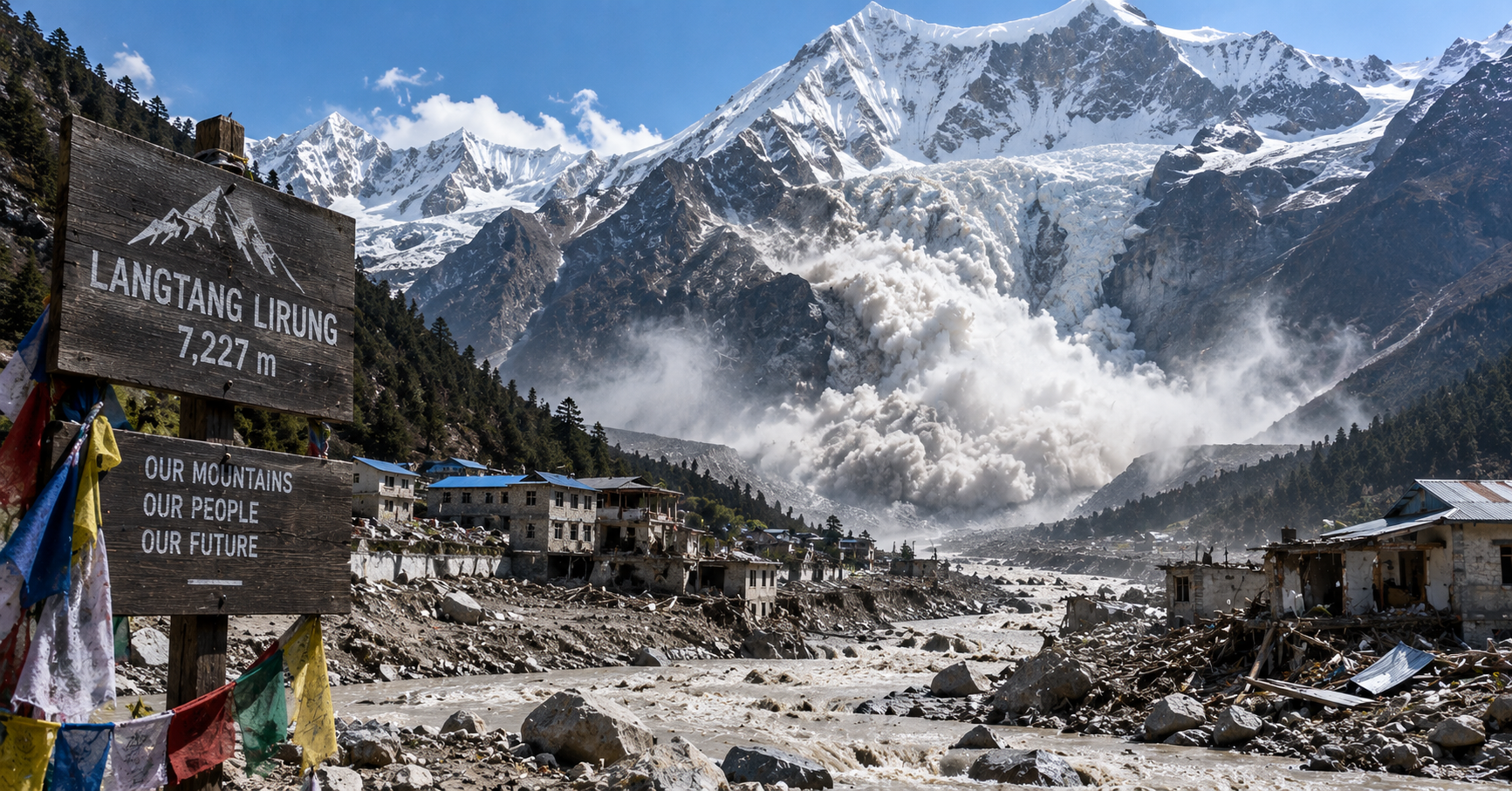
A World Weather Attribution assessment concludes that human-driven warming probably helped set the conditions for the glacier collapse that caused catastrophic flooding along the Nepal-Tibet border. The event combined environmental change with underlying geological vulnerability.
How the Disaster Unfolded
Floods and landslides tore through towns and villages on both sides of the border, destroying thousands of homes and energy facilities while causing major loss of life.
Glacier Collapse Near Langtang Lirung
Scientists had identified the failure of a glacier slope close to the summit of Langtang Lirung, on the Nepalese side of the Himalayas, as the cause of the flooding. The falling ice struck the valley floor with enough force to register as a magnitude 5.2 earthquake in USGS records.
Multiple Drivers Identified
The study describes a compound event involving higher temperatures, glacier thinning, permafrost thaw and existing geological weaknesses. It says Climate change was a destabilising influence on a slope already prone to failure, rather than the disaster's sole cause.
Scale of the Human Toll
Nepali authorities raised the number of missing people from 5,179 to 6,150. Figures released on Wednesday kept the death toll at about 1,400, underscoring the destruction across the affected settlements.
Findings From the New Assessment
The analysis links conditions before the collapse to warming trends and changes in the mountain environment.
Warmer Conditions and Thinner Ice
July and August in the area were about 1.5C (34.7F) warmer because of human influence on the climate, the assessment said. Regional glaciers have also been thinning by roughly half a metre (1.6ft) annually, potentially worsening fractures and instability.
Snowfall and Earlier Seismic Damage
Heavy snow in October and November added to substantial meltwater early this year. The report also says the magnitude 7.8 earthquake in 2015, which triggered a rock-ice avalanche, may have weakened the rock mass, although officials cannot establish its precise effect on last month's collapse.
Scientific and Official Perspectives
Researchers and Nepali authorities have placed the disaster within the broader risks facing Himalayan mountain areas.
Attribution Assessment
There was “absolutely no doubt” that human-caused warming helped precondition the disaster, according to Dr Friederike Otto of Imperial College London, who co-authored the assessment.
Expert Views on Mountain Instability
Specialists broadly point to the interaction between geology, ice loss and long-term tectonic change.
Vulnerable Slope
Dr Walter Immerzeel of Utrecht University described the location as a geologically vulnerable slope, potentially weakened by the 2015 earthquake and further destabilised as glaciers and permafrost retreat.
Unusual Scale of Failure
Oxford University earth sciences professor Dr Mike Searle said the rising Himalayas make the glacier increasingly steep and make partial collapse inevitable, but called the loss of such a large section at once very unusual.
Warming Risk Ahead
University of Dundee glacier specialist Dr Simon Cook said assigning a single event to Climate change is difficult, while stressing that warming ultimately makes high-mountain environments less stable.
Next Steps for Nepal
The catastrophe has intensified Nepal's calls for international action on warming and climate justice.
Global Climate Appeal
Nepali authorities say the country contributes among the least to greenhouse emissions but is among the places most exposed to global warming's effects. They have urged worldwide efforts to address the issue.
UN Assembly Address
On his first overseas trip as Nepali Prime Minister, Balendra Shah is due to attend the United Nations General Assembly in New York next week, where he will discuss the disaster and climate justice.
Based on reporting from the original report.
Frequently Asked Questions
What started the Nepal-Tibet glacier-collapse disaster?
A glacier slope near the summit of Langtang Lirung on Nepal’s side of the Himalayas failed, sending ice into the valley and triggering catastrophic flooding. Scientists identified warmer conditions, glacier thinning, permafrost thaw and geological weaknesses as contributing factors.
Why is the Nepal-Tibet glacier-collapse disaster drawing attention?
The collapse caused floods and landslides across communities on both sides of the border, destroying homes and energy facilities and causing major loss of life. A World Weather Attribution assessment also found that human-driven warming probably helped create the conditions for the failure.
What are the latest updates on the disaster?
Nepali authorities increased the number of missing people from 5,179 to 6,150, while the reported death toll remained about 1,400. The assessment said July and August temperatures were about 1.5C warmer because of human influence and noted that regional glaciers have been thinning by roughly half a metre annually.
What could happen next after the glacier collapse?
Nepal is expected to continue calling for international action on warming and climate justice. Prime Minister Balendra Shah is due to attend the United Nations General Assembly in New York next week, where he will discuss the disaster and climate justice, while scientists continue examining risks from unstable slopes, retreating glaciers and thawing permafrost.