
Key Takeaways
- G7 urges Iran to halt support for Houthis before UN General Assembly, calling for an end to arms and other assistance.
- Fighting along Yemen’s Red Sea coast has displaced more than 120,000 people and raised concerns about shipping and energy security.
- The Houthis’ reported control of Bab al-Mandab has intensified fears over maritime trade, despite the group’s claim that international shipping is not at risk.
- Iran denies supplying weapons, while Western governments and a 2024 UN expert panel report alleged Iranian and allied support for the Houthis.
- The G7 urged the Houthis to stop attacks on civilian shipping and return to political talks as international partners consider defensive support for Saudi Arabia.
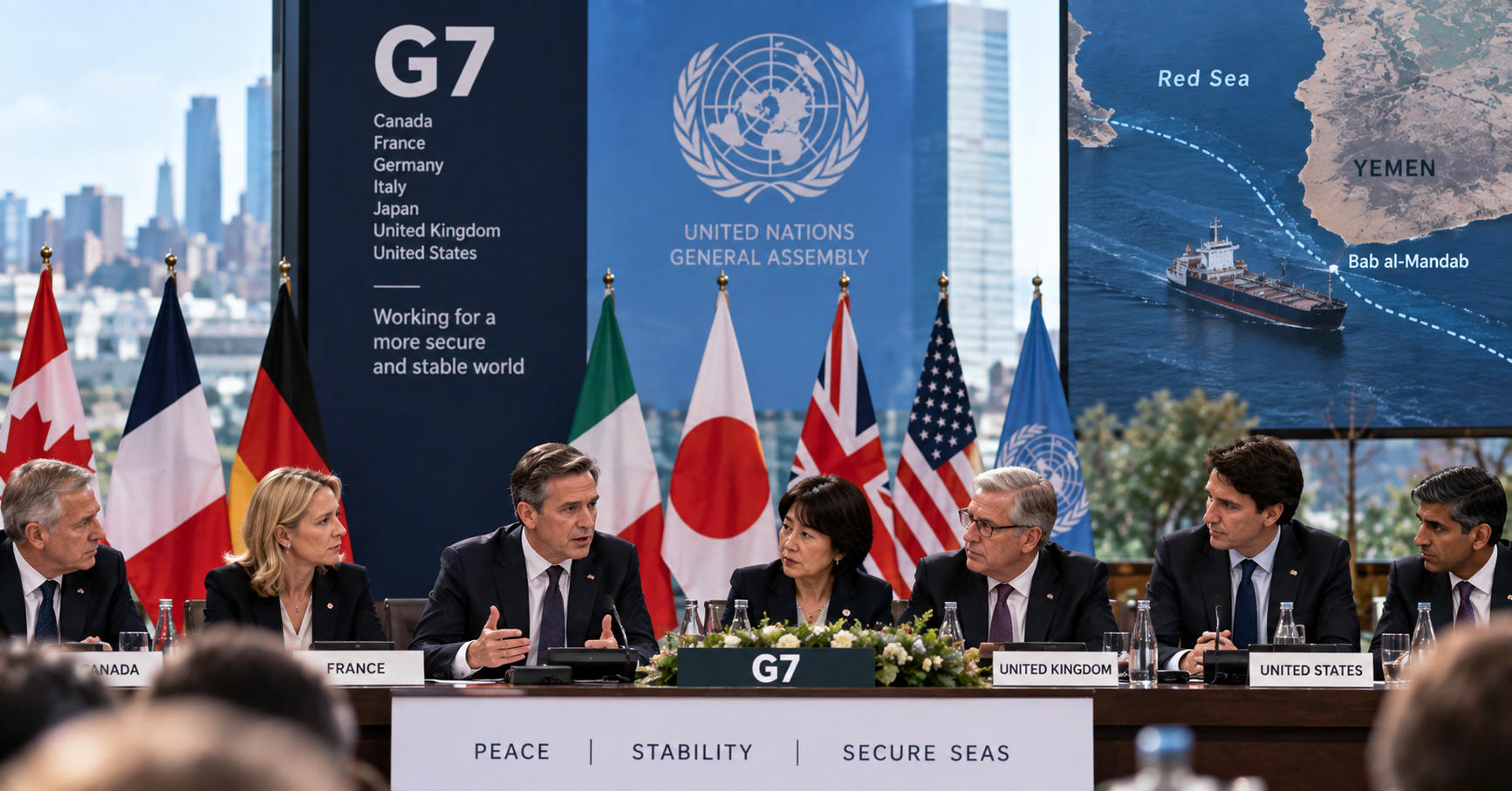
G7 foreign ministers have called on Iran to stop providing arms and support to the Houthis in Yemen, as intensified fighting along the Red Sea coast forces Thousands of people from their homes and raises concerns over shipping and energy security.
Escalation on Yemen’s Red Sea Coast
The statement followed a G7 meeting held on the margins of the UN General Assembly in New York, where Iranian President Masoud Pezeshkian is expected to speak.
Conflict Background
Yemen’s civil war began in 2014, when the Houthis removed the government from Sanaa. A Saudi-led Arab coalition intervened in 2015 to restore the government. An informal four-year truce began breaking down in July after the Houthis declared a maritime embargo against Saudi Arabia.
Control of Bab al-Mandab
Earlier this month, the Houthis took Bab al-Mandab, the narrow passage connecting the southern Red Sea to the Gulf of Aden and the Indian Ocean. The group has said international shipping is not at risk, while maintaining it will target vessels from Saudi Arabia.
Security Concerns
G7 ministers said the escalation against Saudi-backed government forces endangers regional and global energy security. They warned that attacks could deepen the conflict, disrupt trade and fuel wider economic instability.
Military and Diplomatic Developments
The worsening confrontation has brought reported air strikes, missile launches and requests for external assistance.
Reported Casualties and Displacement
Houthi-affiliated media told AFP that Saudi strikes on Mokha killed at least six people, including two children and a woman, and injured eight others. Saudi Arabia had not commented. The UN estimates that more than 120,000 Yemenis have been displaced by the recent surge in fighting.
International Positions
Iran says its backing for the Houthis is political and denies supplying weapons. The UK and other Western governments say naval forces have intercepted Iranian arms shipments headed for Yemen. A 2024 UN expert panel said transfers, training and assistance from Iran’s Revolutionary Guards, Hezbollah and Iraqi specialists strengthened the group.
Responses to the Intensifying War
Publicly reported reactions have centred on official warnings and military support decisions rather than documented social-media debate.
Publicly Reported Responses
No specific social-media reaction was detailed. On Sunday, US embassies across the Middle East issued fresh security alerts as fighting between the Houthis and the Saudi-backed coalition intensified.
Assessments and Policy Debate
Available assessments focus on the humanitarian cost, the threat to maritime routes and the scope of outside support.
Defensive Support
Prime Minister Andy Burnham said the UK would provide defensive air-to-air refuelling using one Voyager aircraft operating from RAF Akrotiri in Cyprus, following a Saudi request for military support.
Competing Claims
The Houthis say their attacks respond to a Saudi blockade of ports and airports under their control and an air strike on Sanaa airport they attribute to the kingdom. Saudi Arabia backs Yemen’s government.
Wider Risks
France has pledged support and is prepared to help secure Saudi energy infrastructure through what a diplomatic source described as a strictly defensive approach. Saudi Crown Prince Mohammed bin Salman has also requested assistance from President Donald Trump, according to US media.
Next Steps in the Crisis
Diplomatic efforts and military decisions will shape whether the confrontation expands further.
Calls for De-escalation
The G7 urged the Houthis to halt military activity, threats and attacks on civilian shipping, and to rejoin political talks in good faith. Ministers also reaffirmed support for Yemen’s government and for the country’s unity, sovereignty, independence and territorial integrity.
Key Developments to Monitor
Attention will focus on discussions at the UN General Assembly, the response to Saudi requests for support, and whether attacks on Saudi cities, infrastructure, airports, oil facilities and Red Sea tankers continue. Trump has said he is considering next steps in the war against Iran.
Based on reporting from the original report.
Frequently Asked Questions
What started the latest escalation involving the Houthis?
The latest escalation followed the breakdown of an informal four-year truce in July after the Houthis declared a maritime embargo against Saudi Arabia. Fighting has intensified along Yemen’s Red Sea coast, amid disputes over Saudi restrictions and attacks attributed to the kingdom.
Why is the G7 urging Iran to halt support for the Houthis?
G7 foreign ministers say Iranian arms and support for the Houthis are contributing to a conflict that threatens civilian shipping, regional stability and global energy security. Iran says its backing is political and denies supplying weapons.
What are the latest updates before the UN General Assembly?
The G7 issued its call after meeting on the margins of the UN General Assembly in New York, where Iranian President Masoud Pezeshkian is expected to speak. The Houthis have taken Bab al-Mandab, while reported Saudi strikes, missile launches and displacement have increased concerns over the humanitarian and security situation.
What could happen next in the Yemen crisis?
The confrontation could either widen or move toward renewed political talks. The G7 has urged the Houthis to stop military activity and attacks on civilian shipping, while the UK, France and Saudi Arabia have discussed defensive support. Further developments will depend on diplomatic efforts, military decisions and the course of fighting.