Some games need a long explanation before anyone can join. A Connect 4 game does not. Two people can understand the objective, make an unbroken line of four, and start playing almost immediately. That makes it a useful choice for a short break, a casual challenge with a friend, or a game night where people want to rotate in and out.
The fun comes from what happens after the first few moves. One player builds a line, the other blocks it, and a different route opens elsewhere on the grid. Here are a few ways to make those quick rounds work for a group.
Explain the rules in one minute
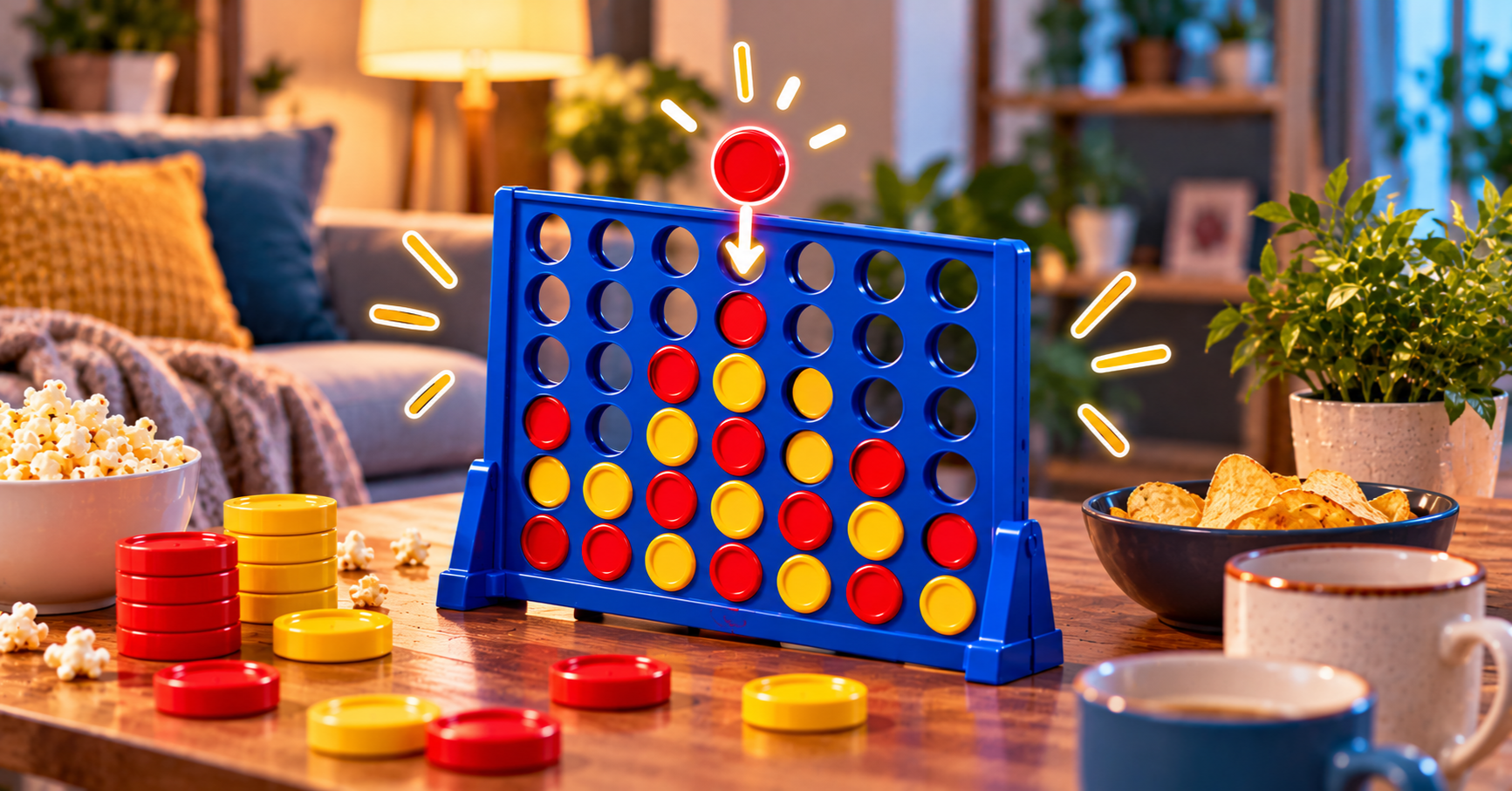
On a standard board, players alternate dropping pieces into seven columns. Each piece settles into the lowest available space of its chosen column. Four of your own pieces in a continuous horizontal, vertical, or diagonal line wins. If the grid fills without a winner, the game is drawn.
Show a sample diagonal if anyone is new. Then let the first match begin. People tend to understand the stacking rule more quickly by seeing a piece land than by listening to a long explanation.
Try a best-of-three match
A single round can be over quickly, particularly if someone misses a simple threat. A best-of-three format gives both players a chance to adjust. Alternate who goes first between rounds, and if you play a third game, choose the starting player with a coin toss or another fair method.
Keep score where everyone can see it if several people are waiting to play. In a tie, you can play another round or simply record it as a draw. The point is to make the next turn clear and keep the pace comfortable.
Make room for new players
If one person plays Connect 4 regularly and another is learning, a short pause to explain an overlooked diagonal can make the round more welcoming. You can also agree to play the first match as a practice game, with both players saying what they are trying to build. Once everyone knows the board, play a regular match without hints.
Avoid treating the practice round as a test. A new player may already see patterns an experienced player overlooks. The simple rules leave space for surprising moves from either side.
Use a rotation for larger groups
With three or more people, one practical setup is winner stays and the next person joins. To stop one person from playing every round, set a two-win limit before rotating the winner out. Another option is a short bracket, with everyone guaranteed an opening match. Choose the format that matches the time and group, rather than adding rules the game itself does not need.
If you play connect four online on a shared screen, confirm whose turn it is before each drop. A misclick into the wrong column can change a match, so give the active player control and enough time to inspect the grid.
End with a rematch worth discussing
After a close round, ask which move changed the game. Was it a missed vertical line, an unexpected diagonal, or a piece that supported the opponent's next drop? A thirty-second recap gives everyone a reason to care about the rematch.
For your next casual get-together, open the Connect 4 game on Entertainment Couch and start with a best-of-three. Its short rounds make it easy for someone new to join, try a different plan, and play again.