The shortest tic tac toe games often end because someone overlooks a square, not because the winning player knows a secret trick. If you play tic tac toe regularly, recognizing a few repeat mistakes can make your decisions clearer. You do not need to calculate every possible game from the opening; start by noticing threats that are already visible.
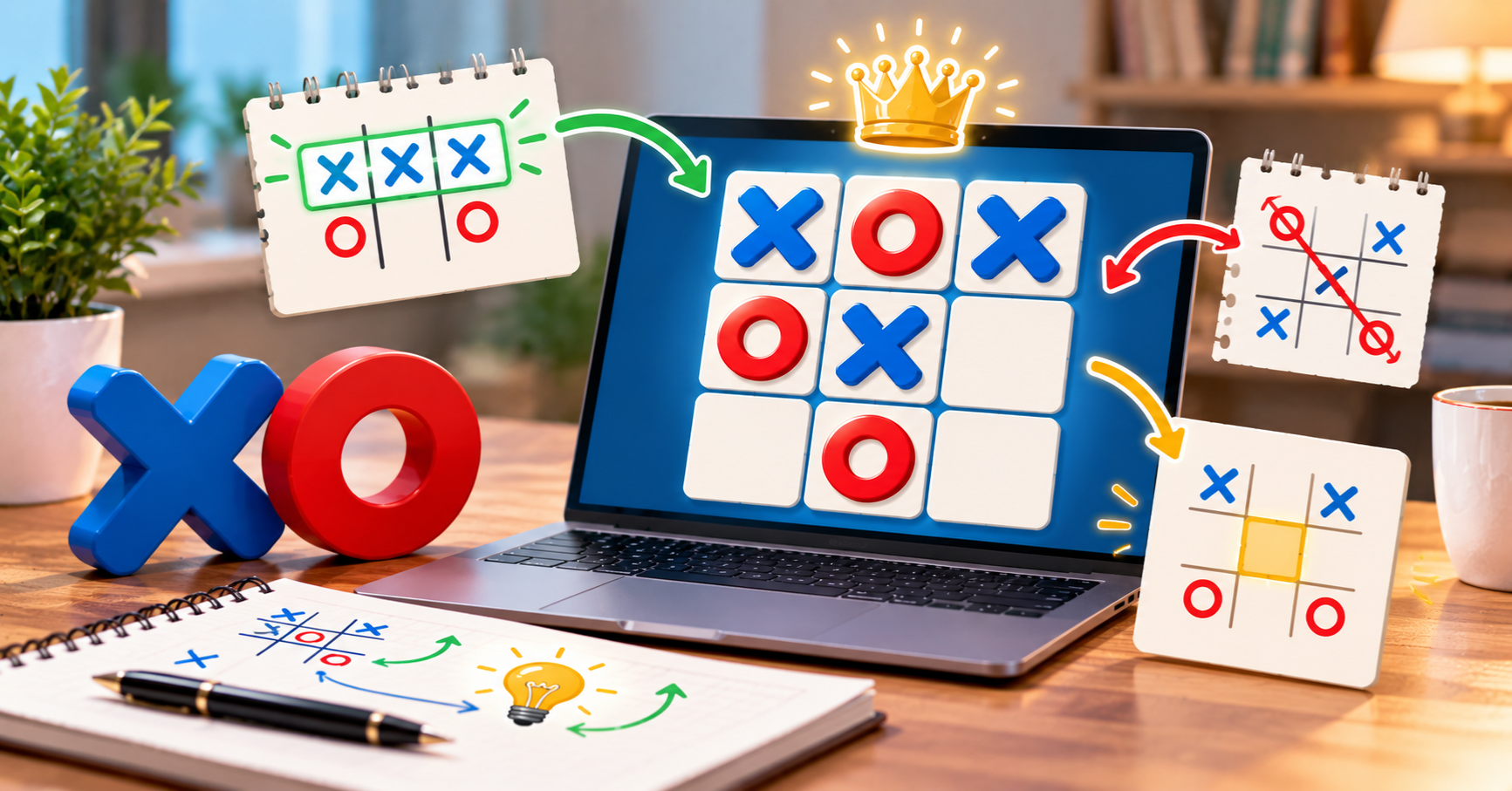
- Missing a winning move. Before worrying about your opponent, check whether you already have two marks in a row, column, or diagonal with the third square empty. If you do, complete the line. A different move might seem clever, but an immediate win finishes the round.
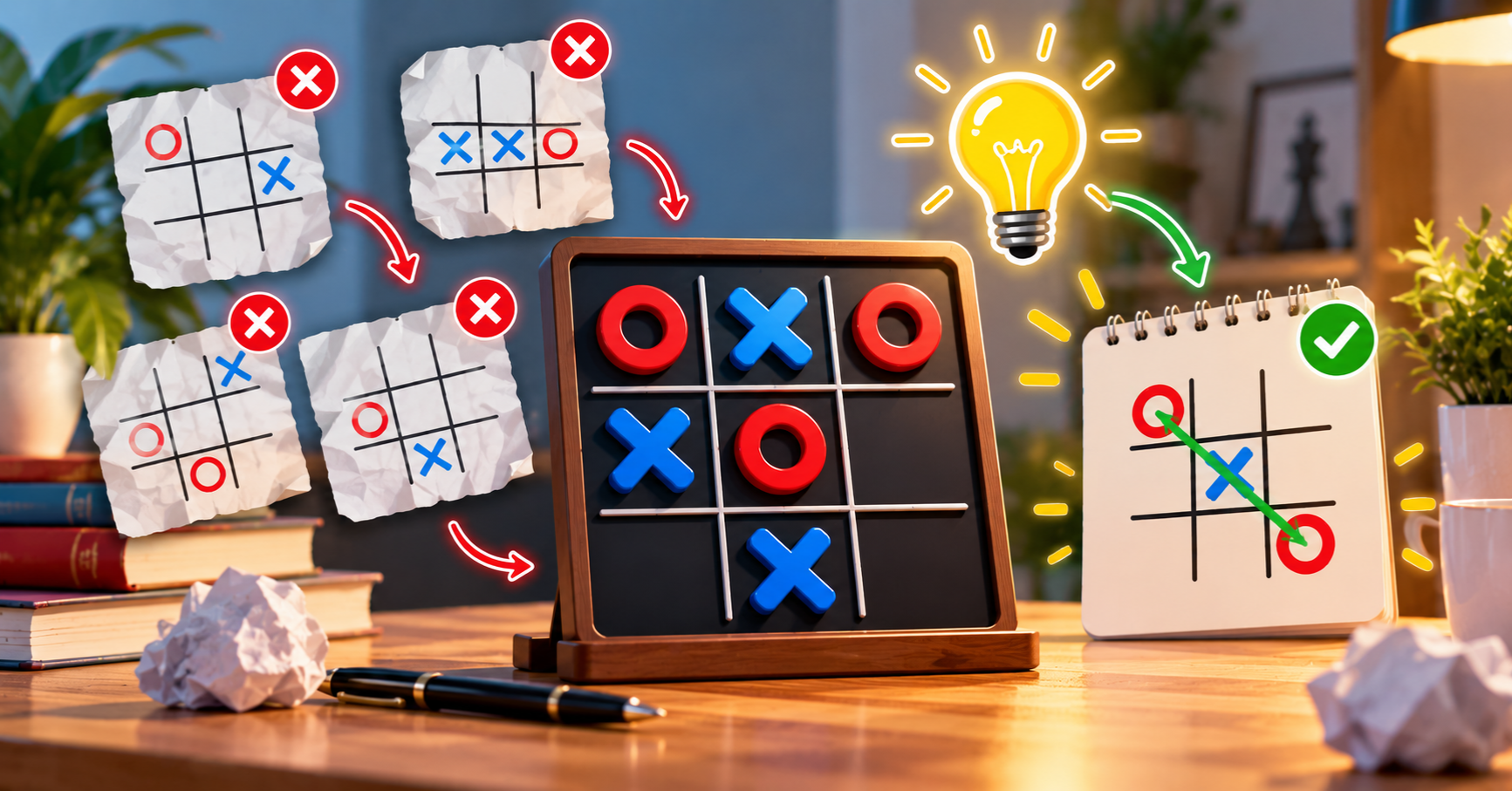
- Forgetting to block. If your opponent has two marks in an open line, their next move can win. Find the remaining square and fill it, unless you have a winning move of your own right now. Scanning all eight lines takes only a few seconds on a three-by-three board.
- Watching rows but not diagonals. The two diagonals cross the grid in different directions. Because they do not sit neatly in one row, they are easy to overlook when you are playing quickly. Trace both diagonals after every move, especially if someone has taken the center.
- Relying on a fixed first-move rule. You may hear that the center or a corner is always the answer. These squares offer useful possibilities at the start, but later moves must respond to the board. A necessary block on an edge is more valuable than an unrelated move into an attractive corner.
- Focusing on a line that is already blocked. Once a line contains both X and O, neither player can win along that line. Stop spending turns trying to add more marks to it. Instead, look for rows, columns, or diagonals where you can still make three of your own marks.
- Allowing two threats at once. A fork creates two different ways to finish a line on the next turn. Blocking one may leave the other open. Before placing your mark, imagine the opponent's reply and ask whether it would create two separate threats. If so, find a move that prevents the setup instead of reacting after it happens.
- Treating every draw as a failure. Standard tic tac toe is a draw with correct play from both sides. Sometimes neither player has made a mistake large enough to lose. Review the round to see whether you missed a win, but do not assume that a draw means you chose the wrong opening.
When you play a free tic tac toe round on Entertainment Couch, pick one mistake from this list to watch for. Afterward, ask yourself whether the first important moment involved an immediate win, a missed block, or a fork. That small review is more useful than starting the next round without noticing why the last one ended.
If you are unsure, replay the moves on a blank grid. Seeing each mark appear in order often reveals the exact turn when a safe position became difficult to defend.