It is possible to know every rule of Connect 4 and still lose sight of the board after a few turns. The grid gets crowded, a promising line draws your attention, and a simple winning move appears somewhere else. If you play Connect 4 online, learning to recognize a handful of common mistakes can improve your decisions without making the game feel complicated.
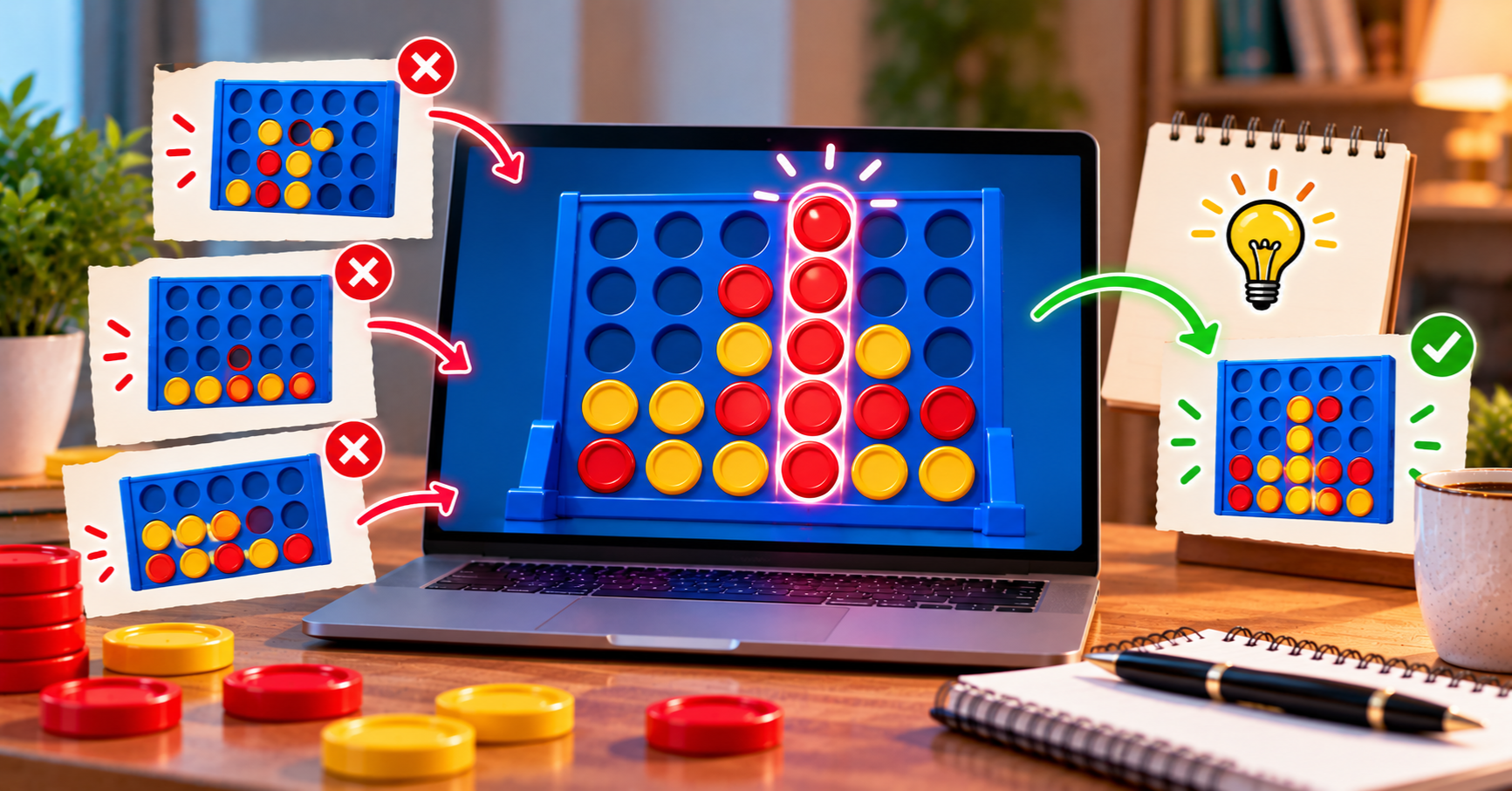
- Looking only at your own pieces. Your three-piece line matters, but your opponent may already have a winning drop. Before planning an attack, scan the spaces where their next piece can actually land. If one of those spaces completes four, address that threat first unless you can win immediately yourself.
- Missing a diagonal. Horizontal lines are easy to see because they resemble a row. A diagonal can be less obvious, especially when other colored pieces interrupt the visual pattern. Check both rising and falling diagonals after every move. Count only four pieces of the same color in a continuous line; a gap does not count as a connection.
- Treating an empty square as playable. In a connect four game, you cannot place a piece in any open cell. Your piece falls to the lowest empty cell of the chosen column. A fourth square above an empty space may be part of a future plan, but it is not available on the next turn. Confirm where the piece will land before calling a line an immediate threat.
- Blocking the wrong square. You might see three opposing pieces and place a blocker beside them, yet still leave the actual winning landing space open. Trace the full potential line and identify the exact column the opponent would choose. Then check that your defensive piece will reach the intended square.
- Giving the opponent support. Your new piece becomes the surface on which the next piece in that column will rest. An innocent-looking drop may place the opponent one move away from completing a line on the square directly above it. Preview their reply before dropping, especially when the board is crowded.
- Building only one line. A single visible threat is often easy to block. Try to keep several directions in mind: one horizontal route, a diagonal route, or a vertical stack. You do not need to pursue them all on every turn. The aim is to avoid committing every move to a pattern your opponent can stop with one drop.
- Rushing after a good move. Winning one exchange of threats does not finish the connect 4 game. After your opponent blocks, rescan the board rather than dropping automatically into your original column. Their defensive piece may change the available landing spaces and create a new danger.
A quick routine can help: check whether you can win, check whether they can win, then check what your chosen move lets them do next. These three steps take only a moment and catch many avoidable errors. Open Connect 4 on Entertainment Couch, play a few rounds, and focus on one mistake from this list at a time.