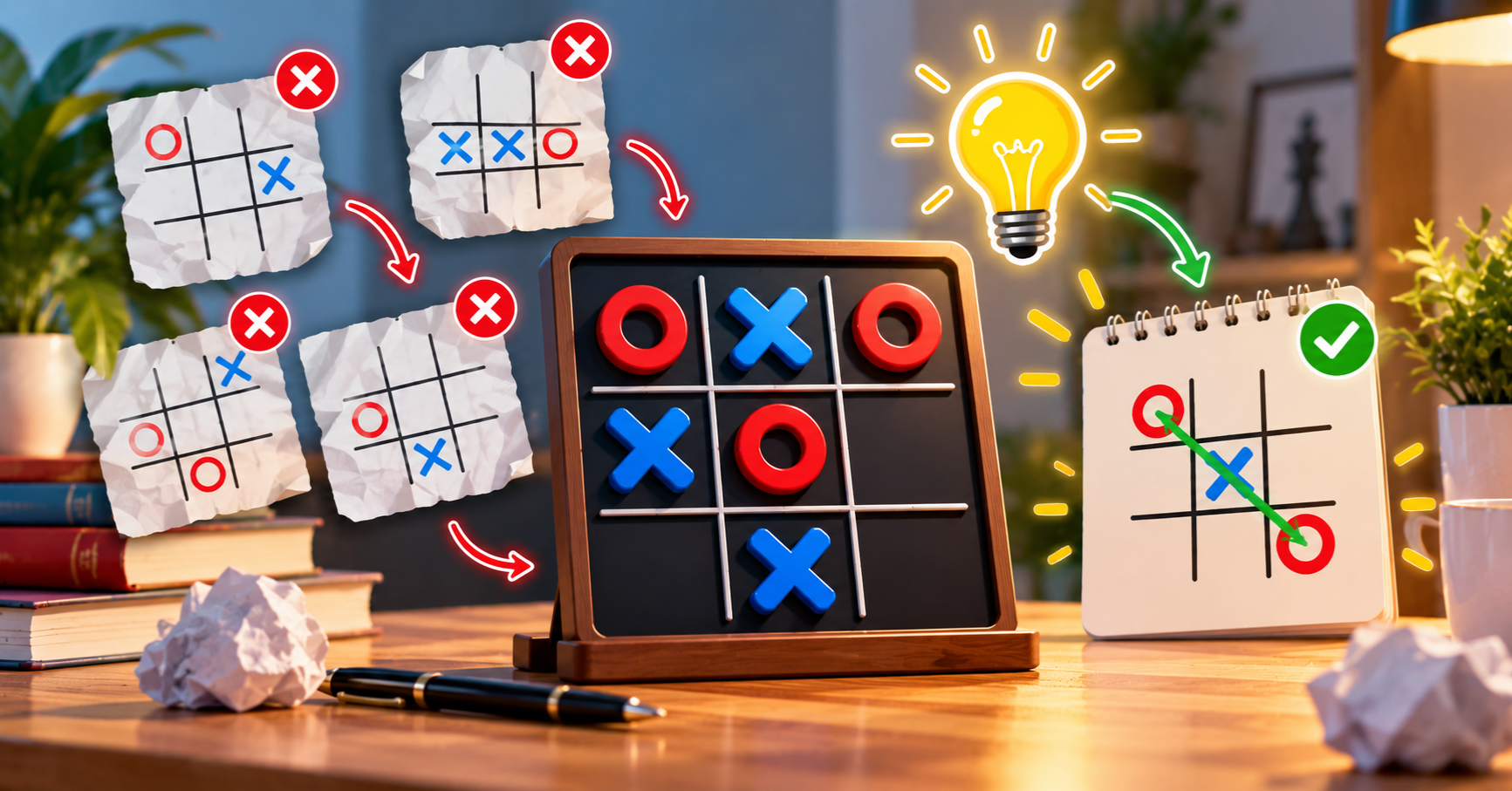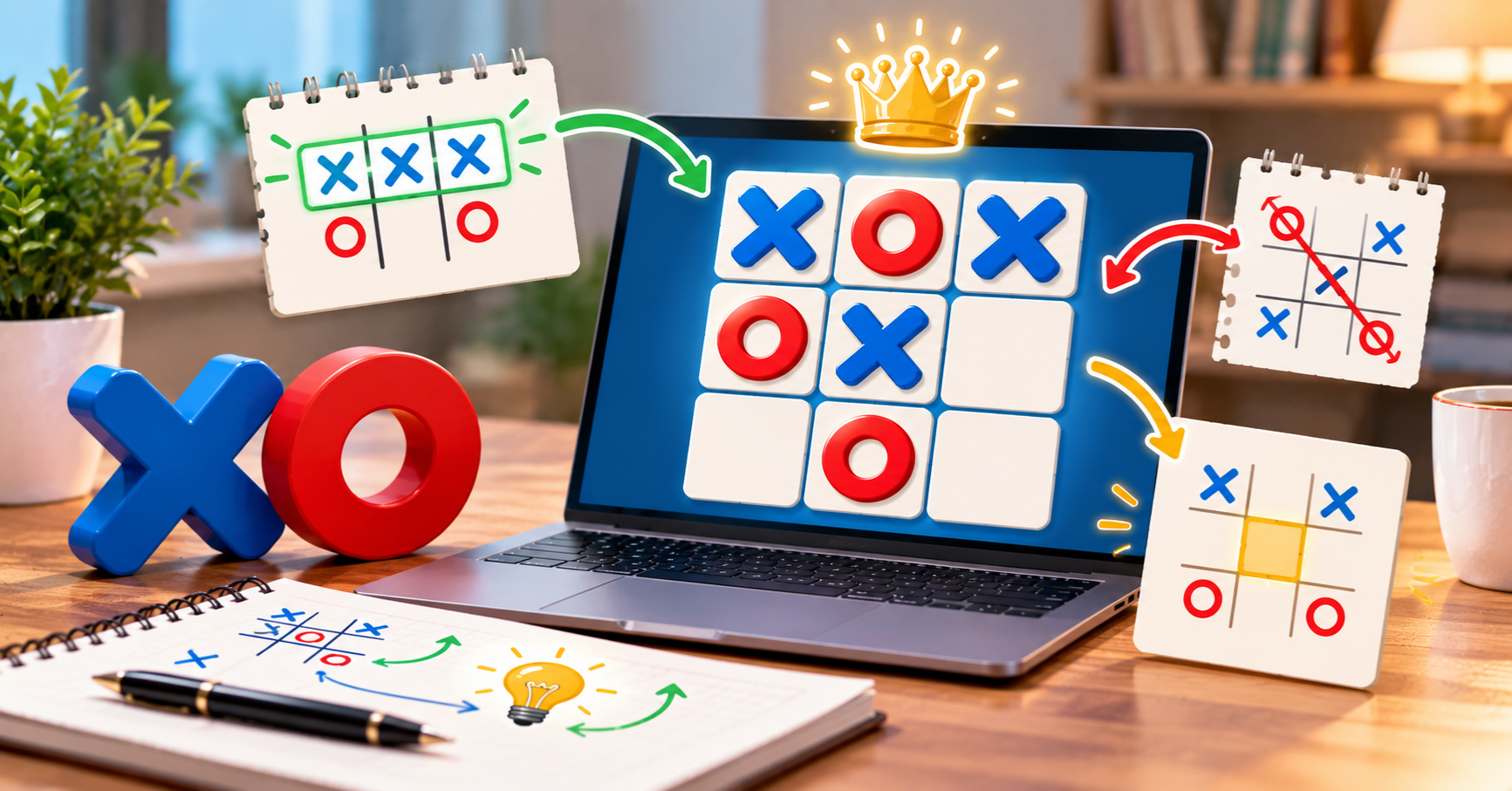

Connect 4 is easy to start: choose a column, drop a piece, and try to make a line of four before your opponent does. The rules fit into a minute, but the choices become interesting as soon as both players begin blocking and building lines at the same time. If you are about to play Connect 4 online for the first time, this guide will help you understand the board and make a more thoughtful opening move.
The basic setup
A standard Connect 4 game uses a grid with seven columns and six rows. Two players take turns dropping different colored pieces into a column. A piece falls to the lowest empty space in that column, or rests on top of the pieces already there. You cannot choose an empty square halfway up the grid: every move follows that stacking rule.
The first player to connect four of their own pieces in a continuous horizontal, vertical, or diagonal line wins. If every space fills without either player forming a line of four, the game is a draw. Some websites may offer variations, but these are the familiar rules to look for when you start a standard connect four game.
What a turn looks like
On each turn, select a column that still has an open space. Before committing, check the row where your piece will land. A good move depends on the landing position, not simply the column you point to. If another piece is already in the bottom cell, yours will sit one row higher. That can create a useful line, block an opponent, or make a square available for the opponent's next move.
Look for all three ways to win. Horizontal lines run across a row. Vertical lines stack in one column. Diagonal lines rise or fall across neighboring columns. Diagonals are easy to miss when you focus on only the most obvious horizontal pattern.
Three questions before every move
First, can you win immediately? Scan the available landing spaces for a move that completes a line of four. If one exists, you usually want to take it.
Second, can your opponent win on their next turn? If so, find a move that stops that specific threat. Remember that your piece has to land on the blocking square; an empty square with no support underneath it cannot be filled yet.
Third, what happens after you move? A piece can help your line while also creating the support your opponent needs for a winning drop above it. Looking one turn beyond your own move is a useful habit from the beginning.
Give yourself room to build
The middle columns often give you more possible directions for lines than the outermost columns. That makes them worth considering early, though no single column is automatically the best move in every position. Watch the whole grid rather than stacking only in the center or chasing one pattern regardless of your opponent's response.
When you play connect 4, expect your first few games to include missed diagonals and accidental setups for your opponent. Pause for a moment before each drop, check both players' immediate threats, and treat every game as practice. Open Connect 4 on Entertainment Couch and use the three-question check on your first round.