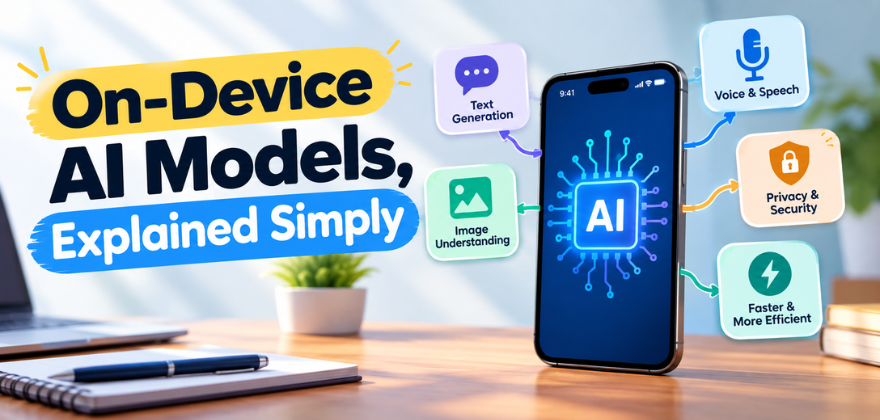
For years, useful AI meant sending your data to a data center and waiting for an answer. That's changing fast as phones and laptops ship with dedicated chips built to run AI models locally.
The benefit is speed and privacy: your photos, messages and voice never have to leave the device to be understood. The trade-off is that on-device models are smaller, so they're tuned for specific everyday tasks rather than open-ended reasoning.
Expect to see more features quietly move on-device over the next year — transcription, photo editing and smart replies among the first to make the jump.
The bigger story is what this unlocks for offline and low-connectivity regions, where cloud-dependent AI has never really worked well.