Key Takeaways
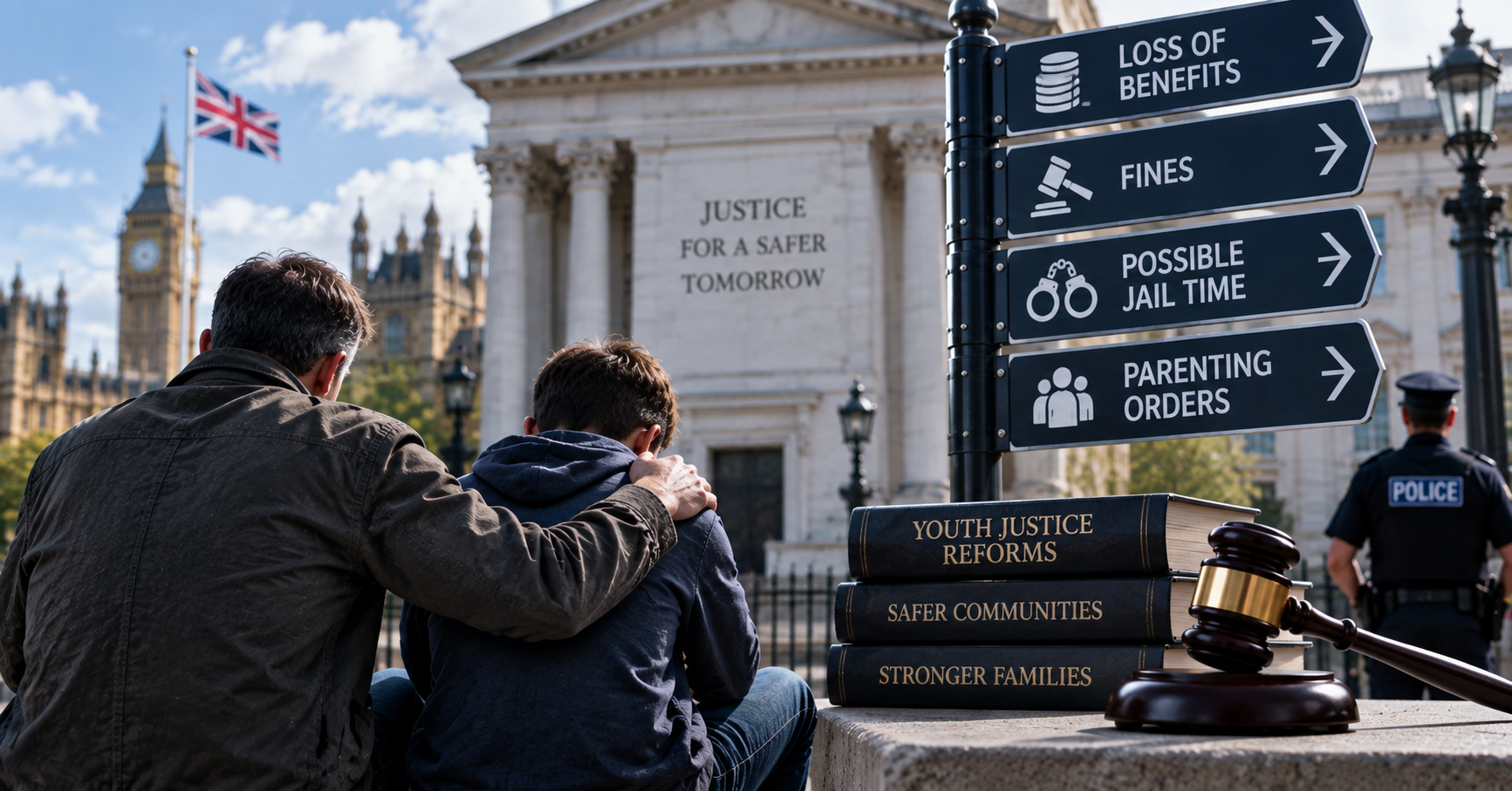
- Parents Could Lose Benefits or Be Jailed Under Youth Justice Reforms in England and Wales, under proposed changes to youth justice arrangements.
- The reforms would expand the use of Parenting Orders, which can require counselling and currently carry fines of up to £1,000 for breaches.
- Possible sanctions could include benefit reductions or custody, with prison reserved for “the most extreme cases” and subject to judicial discretion.
- Parenting Orders fell from more than 1,000 in 2009/10 to 33 in 2022/23, prompting plans to strengthen their use.
- Critics question whether punitive measures would support children, while debate continues over raising the age of criminal responsibility from 10 to 14.
Parents of children who offend could face benefit reductions, larger financial penalties or, in exceptional circumstances, imprisonment under proposed changes to youth justice arrangements in England and Wales.
Proposed Parental Accountability Measures
The reforms would strengthen the role of Parenting Orders in responding to youth offending, with ministers seeking greater parental involvement in efforts to prevent further crime.
Existing Order Framework
Courts must currently consider a Parenting Order when a child under 16 is convicted. For 16 and 17-year-olds, an order may be considered where it could help avert additional offending. Orders can run for no longer than 12 months.
Potential Sanctions
Parenting Orders can require a parent or guardian to attend counselling aimed at addressing a child’s conduct. Breaching an order is a criminal offence and can bring a fine of up to £1,000, according to the Sentencing Council. The proposed approach could include docking benefits or custody, subject to a judge.
Falling Use of Orders
Government figures show Parenting Orders have become far less common, dropping from more than 1,000 in 2009/10 to 33 in 2022/23. The planned overhaul is intended to expand and reinforce their use.
Ministerial Case for Reform
The government outlined youth justice proposals in May, linking parental responsibilities with efforts to turn around young offenders.
Richards' Position
Youth Justice Minister Jake Richards told the Times that the system should hold parents accountable proportionately for their part in keeping communities safe. His comments described a “carrot-and-stick” model intended to involve Parents more closely.
Limits on Custody
Richards said prison would be reserved for “the most extreme cases” and left to judicial discretion. When the white paper was published, then Justice Secretary David Lammy said consequences would apply where carers wilfully failed to support work addressing their children’s behaviour, while struggling parents could receive judicially directed support.
Responses to the Plans
The proposals have prompted concerns about whether punitive action against parents can support children and reduce offending.
Public Discussion
No social-media reaction is set out, but the policy has entered wider debate over the appropriate balance between intervention, support and sanctions for families.
Professional Perspectives
Charities, lawyers and international bodies have raised related concerns about family support and the age at which children can be held criminally responsible.
Government Rationale
Ministers argue that stronger orders could make parents more active participants in attempts to change young offenders’ behaviour.
Critics' Concerns
Jess Mullen, chief executive of the Alliance for Youth Justice, which represents more than 70 organisations advocating for children, questioned how imprisoning parents would give a child stability or support. Critics say voluntary engagement usually builds trust more effectively.
Age Responsibility Debate
Richards rejected calls to raise the age of criminal responsibility from 10, saying this could weaken public faith and was not a priority. In June, the Bar Council called for it to rise to 14; the United Nations has also recommended at least 14.
Next Steps for Youth Justice
The reforms follow wider scrutiny of failures to intervene before serious violence.
Inquiry Context
Phase One of the Southport Inquiry found “catastrophic” failures by the parents of Southport killer Axel Rudakubana and by agencies, meaning opportunities to prevent the 2024 child murders were missed.
Judicial Decisions
Key issues will include how strengthened Parenting Orders are applied, when judges consider benefit reductions or custody, and whether such penalties remain as rare as Lammy said he expected.
Based on reporting from the original report.
Frequently Asked Questions
What started the proposed changes to Parenting Orders?
The proposals followed concerns about youth offending and wider scrutiny of failures to intervene before serious violence. Ministers want parents to play a more active role in efforts to prevent children from reoffending.
Why are the youth justice reforms attracting attention?
The plans could allow courts to consider benefit reductions, larger financial penalties or, in exceptional cases, imprisonment for parents who breach strengthened Parenting Orders. Critics question whether punitive measures would provide children with the stability and support they need.
What are the latest updates on the proposals?
The government outlined its youth justice proposals in May. Youth Justice Minister Jake Richards said custody should be reserved for the most extreme cases and remain subject to judicial discretion. The plans would also expand the use of Parenting Orders, which fell from more than 1,000 in 2009/10 to 33 in 2022/23.
What could happen next under the youth justice reforms?
The key issues will be how strengthened Parenting Orders are implemented, when judges consider benefit reductions or custody, and whether imprisonment remains limited to the rare cases described by ministers. The proposals will also continue to face scrutiny over parental responsibility, family support and the age of criminal responsibility.