Key Takeaways
- US President Donald Trump announced an immediate ban on CNN and Politico from the White House, while also naming MS NOW in his statement.
- The announcement did not explain how the proposed restriction would work or whether it would prevent journalists from entering White House grounds.
- CNN and Politico said they would defend their reporting and First Amendment rights, calling the proposed action an attack on press freedom.
- Press-freedom groups and the White House Correspondents' Association warned that excluding outlets based on viewpoint could be unconstitutional.
- Legal organizations expect a rapid court challenge, recalling Trump’s earlier suspension of CNN correspondent Jim Acosta’s White House credentials.
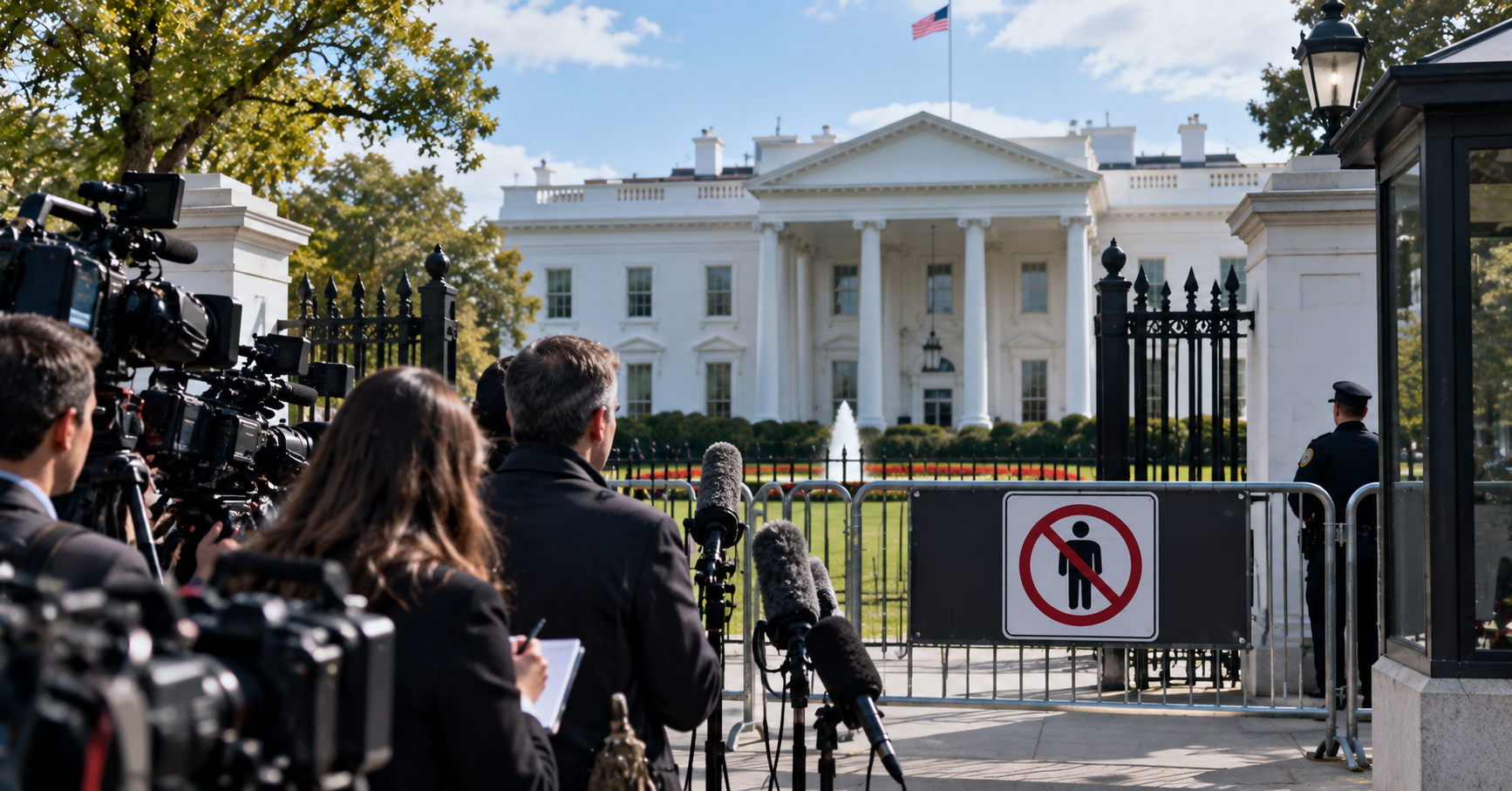
US President Donald Trump said on Friday that he was immediately banning CNN and Politico, along with MS NOW and Politico as named in his announcement, from the White House. The president did not set out how the proposed restriction would operate or whether it would stop their staff entering the grounds.
Proposed White House Restrictions
The announcement marks a further escalation in the administration’s disputes with parts of the press corps.
Announcement on Friday
In a Truth Social post, Trump accused the outlets of repeatedly publishing or broadcasting “fiction or lies” about his administration, without identifying reports that led to the decision. He later described it as a “very simple ban.”
Access Remains Unclear
It was not clear what practical limits the measure would impose. Shortly after the announcement, reporters for Politico and CNN remained on the White House grounds, while a CNN crew was travelling with Vice-President JD Vance to and from an Iowa event.
Press Pool Significance
CNN is among five US outlets that provide video for the pool, under which reporting from presidential events is shared with other news organizations. The BBC participates in the White House radio pool.
Responses From News Organizations
CNN and Politico both said they would defend their ability to report on the administration.
Network and Publisher Positions
CNN called a possible prohibition an illegal attack on press freedom, backed its White House journalists and said the Constitution protects reporting from government interference. Politico said it would continue fair coverage of this and future administrations and would vigorously defend its First Amendment rights.
Trump’s Further Comments
Asked about additional outlets, Trump called the New York Times and the Washington Post “fake news.” In the Oval Office, he said there was no particular reason for acting Friday afternoon, describing the decision as the result of accumulated coverage over years and adding that other outlets could be included.
Press Freedom Concerns
Journalism groups and the White House Correspondents' Association criticized the proposed action.
Association Defence
Association president Jacqui Heinrich said colleagues were being singled out for doing their jobs. Heinrich, who works for Fox News, said the issue concerned the public’s right to an independent account of the actions and decisions of the nation’s highest office.
Legal Assessments
Advocacy and legal groups focused on the constitutional questions raised by excluding specific outlets.
Support for Press Access
No supportive response from press-freedom organizations was described. The groups cited instead argued for the ability of journalists to access and cover the presidency.
Constitutional Criticism
Jameel Jaffer of the Knight First Amendment Institute at Columbia University said exclusion from the pool based on viewpoint would be unconstitutional. Bruce Brown of the Reporters Committee for Freedom of the Press called such a move “textbook viewpoint discrimination.”
Potential Court Outcome
The Reporters Committee said it expected courts to strike down the ban quickly. The Freedom of the Press Foundation also called it illegal, while Trump acknowledged that litigation could follow.
Next Steps and Wider Context
Any implementation of the announced restriction is likely to face immediate scrutiny over access rules and constitutional protections.
Likely Legal Challenge
CNN said a ban, if carried out, would be unlawful, and legal challenges are anticipated. During his first term, Trump suspended CNN correspondent Jim Acosta’s White House credentials, which were restored after CNN sued.
Earlier Press Disputes
Since returning to office in January 2025, Trump has repeatedly clashed with the press corps and brought conservative bloggers, influencers and other media into the briefing room. In February, the administration took over management of the press pool and limited AP access over its use of “Gulf of Mexico” rather than “Gulf of America”; AP’s lawsuit remains pending.
Based on reporting from the original report.
Frequently Asked Questions
What started the proposed White House restriction on CNN and Politico?
The issue began with a Friday Truth Social post in which US President Donald Trump said he was immediately banning CNN and Politico, along with MS NOW and Politico as named in his announcement. He accused the outlets of repeatedly publishing or broadcasting what he called “fiction or lies” about his administration, but did not identify specific reports.
Why is US President Donald Trump moves to bar CNN and Politico from White House trending?
The announcement has drawn attention because it could restrict access for specific news organizations and raise constitutional questions about press freedom, viewpoint discrimination and journalists’ ability to cover the presidency. The practical effect of the proposed measure also remains unclear.
What are the latest updates on the proposed ban?
CNN and Politico said they would defend their ability to report on the administration and their First Amendment rights. Reporters for both outlets remained on White House grounds shortly after the announcement, while a CNN crew travelled with Vice-President JD Vance to and from an Iowa event. Journalism and press-freedom groups also criticized the proposed action.
What could happen next?
The proposed restriction could face immediate legal scrutiny if it is implemented. CNN said a ban would be unlawful, and the Reporters Committee for Freedom of the Press said it expected courts to strike it down quickly. The administration has not explained how the measure would operate or whether it would prevent staff from entering the White House grounds.