Key Takeaways
- The inaugural Ultimate Championship in Budapest introduced a new season finale for elite athletics, with a record $10m (£7.4m) prize fund and three sold-out evenings.
- World Athletics developed the biennial event to provide a clearer, more compact competition featuring leading athletes and global titles.
- A distinctive stadium and broadcast presentation used illuminated events, athlete projections, predicted winning chances and enhanced winner celebrations.
- Organisers placed greater emphasis on athlete profiles through red-carpet appearances, stadium introductions, interviews and post-event exposure.
- The format drew criticism over excluded disciplines and reduced field-event attempts, leaving questions for the next edition.
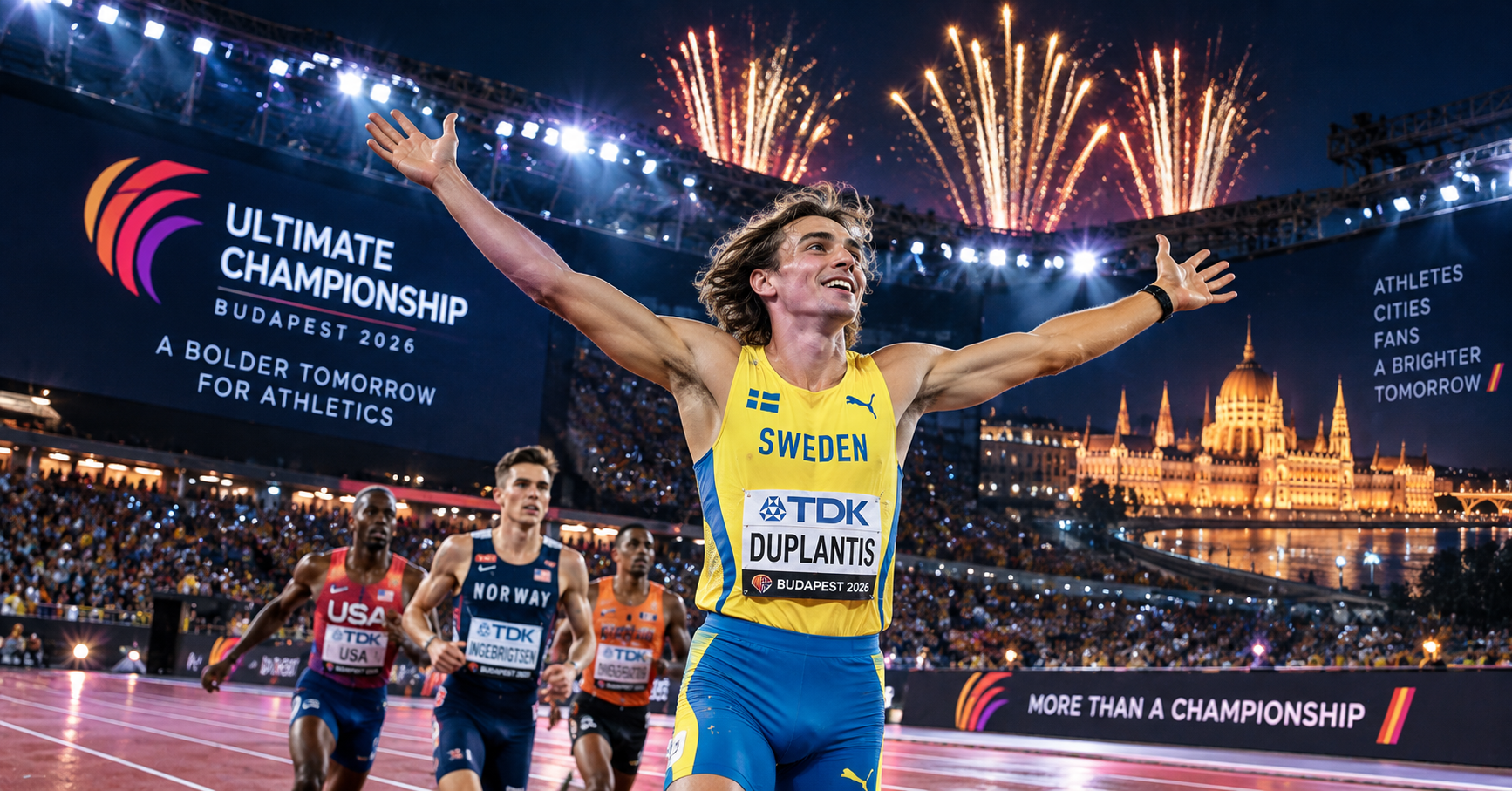
The inaugural Ultimate Championship in Budapest combined a record $10m (£7.4m) prize fund with a deliberately different presentation of elite athletics. Across three sold-out evenings, the event sought to create a clear, high-energy season finale, ending with Armand Duplantis performing the Ultimate Championship's official song as fireworks celebrated the winners.
A New Season Finale
World Athletics and president Lord Coe spent three years developing a response to the sport's lack of a decisive end-of-season event. The championship is planned as a biennial contest featuring leading athletes, global titles and record financial rewards.
Athlete Response
Usain Bolt, the event ambassador, described the meeting as a positive move for track and field, saying athletes had embraced its different energy. Britain’s Imani-Lara Lansiquot said the arrival experience exceeded expectations and made athletes feel celebrated.
Clearer Competition
Athletics has struggled to sustain Olympic-level attention during the intervening four-year cycle. Its calendar can be difficult for occasional viewers to follow, and the best competitors do not always meet regularly; the Ultimate Championship was designed to start addressing both issues.
Compact Format
The premise centred on short, fast-moving sessions in which leading athletes competed directly. Organisers also intend the event to serve as a place to test ideas that could influence the sport’s future.
A Distinctive Stadium Show
The championship used a visual and broadcast style intended to distinguish it from established global meetings.
Visual Presentation
A black-painted infield drew attention to illuminated events, while horizontal jumps took place in a bright pink sandpit. Winners received a new trophy, with sparklers and celebratory music accompanying their crowning moment.
Broadcast Enhancements
Television viewers saw athlete images, predicted winning chances and projected positions. Jakob Ingebrigtsen was forecast 12th before winning the 5,000m, while Josh Kerr was predicted last in the 1500m after both had competed sparingly in recent seasons.
Athletes at the Centre
Beyond the prize money, organisers placed greater emphasis on athlete profiles and post-event visibility.
Building Personalities
Top athletes attended a red-carpet photoshoot event on the eve of competition. Stadium videos introduced competitors, and champions gave centre-court-style interviews before joining Bolt and master of ceremonies Noah Lyles in a champions’ enclosure.
Why Storytelling Matters
Several figures highlighted the potential value of giving audiences more ways to connect with competitors.
Hunter Bell’s View
Georgia Hunter Bell said the videos could help reveal personality and character, comparing the appeal of athlete personality to that of Carlos Alcaraz, Serena Williams and Tadej Pogacar.
Cram’s Assessment
Former 1500m world champion Steve Cram said the added exposure would benefit the sport and raise athletes’ profiles.
Financial Incentive
The record prize pot formed part of World Athletics’ effort to reward competitors while strengthening the event’s appeal.
Format Questions Ahead
The launch also prompted criticism over which events were included and how some competitions were decided.
Excluded Disciplines
Event selection was informed by viewer behaviour, including pulse rate and sweat response. The 3,000m steeplechase, 10,000m, shot put and discus were absent. Jazmin Sawyers said the championship was worse off without some field events, although she believed it had a place alongside regular championships. Coe said the programme was not “in tablets of stone”.
Next Edition
Several field events reduced the field to four athletes by the fourth and final round. Sawyers preferred all eight receiving four attempts, noting she moved from fourth to second and suggesting an athlete in eighth could potentially reach first. The next championship is scheduled for 2028, at the end of an Olympic season, and its relationship with the Diamond League remains unresolved.
Based on reporting from the original report.
Frequently Asked Questions
What is the Ultimate Championship?
The Ultimate Championship is a new biennial athletics competition developed by World Athletics as a high-profile season finale. Its inaugural event in Budapest featured leading athletes, a $10m (£7.4m) prize fund and a compact format across three evenings.
Why does the Ultimate Championship matter for athletics?
It aims to give athletics a clearer end-of-season focus and make the sport easier for occasional viewers to follow. The event was also designed to bring leading competitors together more directly between Olympic cycles.
What are the main benefits and implications of the championship?
The championship offers substantial financial rewards, greater athlete visibility and a distinctive stadium and broadcast presentation. Its format may also provide a testing ground for ideas that could influence athletics, although the selection of events and competition structure have prompted debate.
How can readers assess what makes the Ultimate Championship different?
Readers can compare its compact sessions, direct athlete matchups, included disciplines, broadcast features and athlete-focused presentation with established athletics meetings. They can also consider the views raised about excluded events and how field-event rounds were structured.