Key Takeaways
- Kimi Antonelli won the first Spanish Grand Prix at Madring, extending his championship advantage ahead of Max Verstappen and Lando Norris.
- Madring’s hybrid layout produced limited overtaking, with no long straight leading into a major braking zone and several challenging corner approaches.
- The circuit’s lengthy pit lane increased the time cost of stops, making alternative strategies less attractive and potentially encouraging tyre conservation.
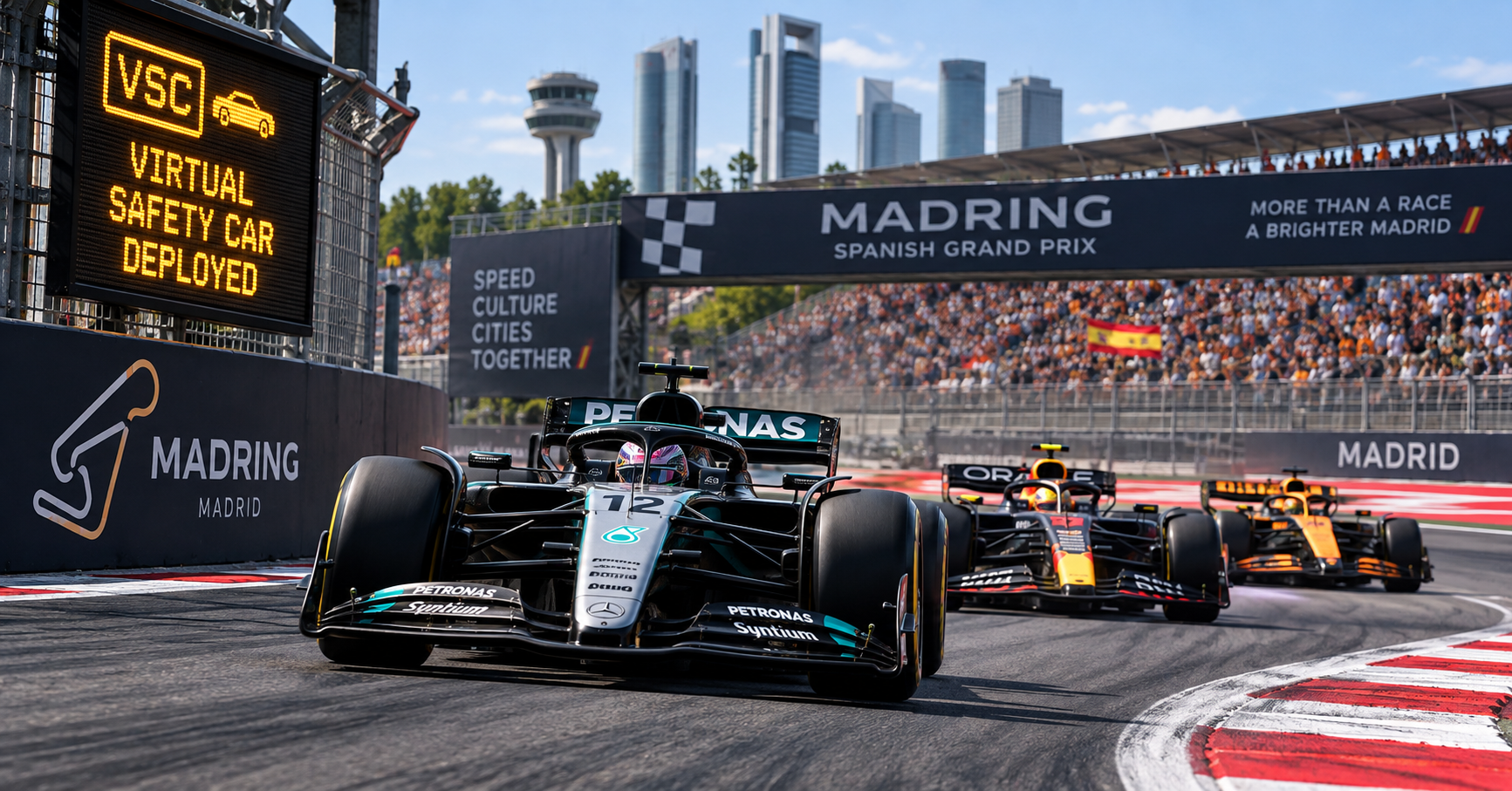
- Lando Norris lost the lead after a virtual safety car began just after he passed the pit entry, renewing debate over VSC timing and minimum-duration rules.
- Norris suggested changes to the final sector, the Turn Five chicane, Turn Seven and the fragmented pit-and-paddock layout to improve future racing.
Mercedes Kimi Antonelli extended his championship advantage by winning the first Spanish Grand Prix at Madring. Max Verstappen took second place, while Red Bull and McLaren's Lando Norris finished third after losing the lead when a virtual safety car was called just after he had passed the pit entry.
Madring’s Racing Challenge
Questions surrounding the new circuit centred on its ability to produce overtaking, despite much of the layout having been built from scratch around the Ifema exhibition centre near Madrid’s Barajas international airport.
A New Hybrid Layout
Madring combines purpose-built sections with existing roads. Before the weekend, drivers had already forecast that passing would be exceptionally difficult, and the race supported that assessment.
Barriers to Overtaking
The course lacks a lengthy straight feeding into a major braking zone. Drivers also highlighted corner approaches requiring braking and turning at the same time, plus walls that close in toward the circuit at exits.
Pit-Lane Consequences
Its pit lane is the longest on the calendar. A longer stop costs more time, reducing the appeal of strategies beyond one stop; with high tyre wear, this can also mean more tyre conservation and fewer incidents or safety cars.
Potential Circuit Revisions
The design concerns are not viewed as impossible to address, and Norris identified changes that could improve the racing before next year.
A Revised Final Sector
Norris proposed removing Turns 18 and 19, linking Turn 17 directly to Turn 20 and creating a wider entry and large hairpin, comparable to Austin Turn One or Turn 10 in Austin.
Wider Site Planning
He also pointed to the Turn Five chicane and the stretch through Turn Seven. The pits and paddock were spread across a larger, more fragmented area than at other tracks; a pit lane not divided by a building and an outdoor, unified working area would help.
Virtual Safety Car Debate
Norris’ result renewed discussion over how virtual safety car timing can affect a race and whether the procedure should be adjusted.
An Unusual Penalty
A virtual safety car slows the effective time cost of a pit stop but does not reset the field as a full safety car does. Norris was uniquely unable to stop under it because of his precise position when it began, costing him a potential win.
Options Under Discussion
The issue has reportedly been raised repeatedly in driver briefings, although any revision would need to balance fairness, safety and strategy.
Minimum Duration
One possible response would be to require a virtual safety car to run for at least one complete lap, though it is not known whether Norris’ misfortune will bring such a change.
Strategic Trade-Off
Teams have long gained from a virtual safety car when their strategy was designed around waiting for one. Norris himself benefited in that way during his first victory in Miami in 2024.
Previous Rule Versions
Formula 1 has used different approaches before, including closing the pit lane for particular periods. Within the sport, safety-car interventions are accepted as part of the competitive equation.
Lessons From the Opening Race
The inaugural event delivered a significant standings result but also exposed operational and sporting issues for organisers and Formula 1 to consider.
Qualifying Versus Racing
Norris described the circuit as enjoyable to drive and strong for qualifying, while arguing that it was not yet a great venue for racing. He said it could become one if changes are made.
Ongoing Examination
BBC F1 correspondent Andrew Benson examined the concerns after the race, including the design limitations and the virtual safety car outcome that reshaped the fight at the front.
Based on reporting from the original report.
Frequently Asked Questions
What is Madring Scrutiny Grows After Spanish Grand Prix VSC Drama about?
The topic examines the first Spanish Grand Prix at Madring, where Mercedes Kimi Antonelli won, Max Verstappen finished second and Lando Norris took third after losing the lead during a virtual safety car period. It also explores concerns about overtaking and the circuit’s design.
Why does the Madring circuit and virtual safety car outcome matter?
The race highlighted how a layout without a long straight leading into a major braking zone can limit passing. Norris’ position when the virtual safety car began also meant he could not pit under it, raising questions about whether the procedure treats drivers fairly in unusual circumstances.
What are the main benefits and implications of the proposed changes?
Removing Turns 18 and 19 could create a wider entry and a larger hairpin, potentially offering more overtaking opportunities. Changes to the pit and paddock layout could also improve the site’s usability, while a minimum one-lap virtual safety car could reduce the chance of a similar timing outcome.
How can readers follow the next steps for Madring?
Readers should watch for announcements from Formula 1, organisers and drivers about possible revisions before the next Spanish Grand Prix. Key issues to monitor include the final-sector design, the Turn Five chicane, the Turn Seven section and any proposed change to virtual safety car rules.