Key Takeaways
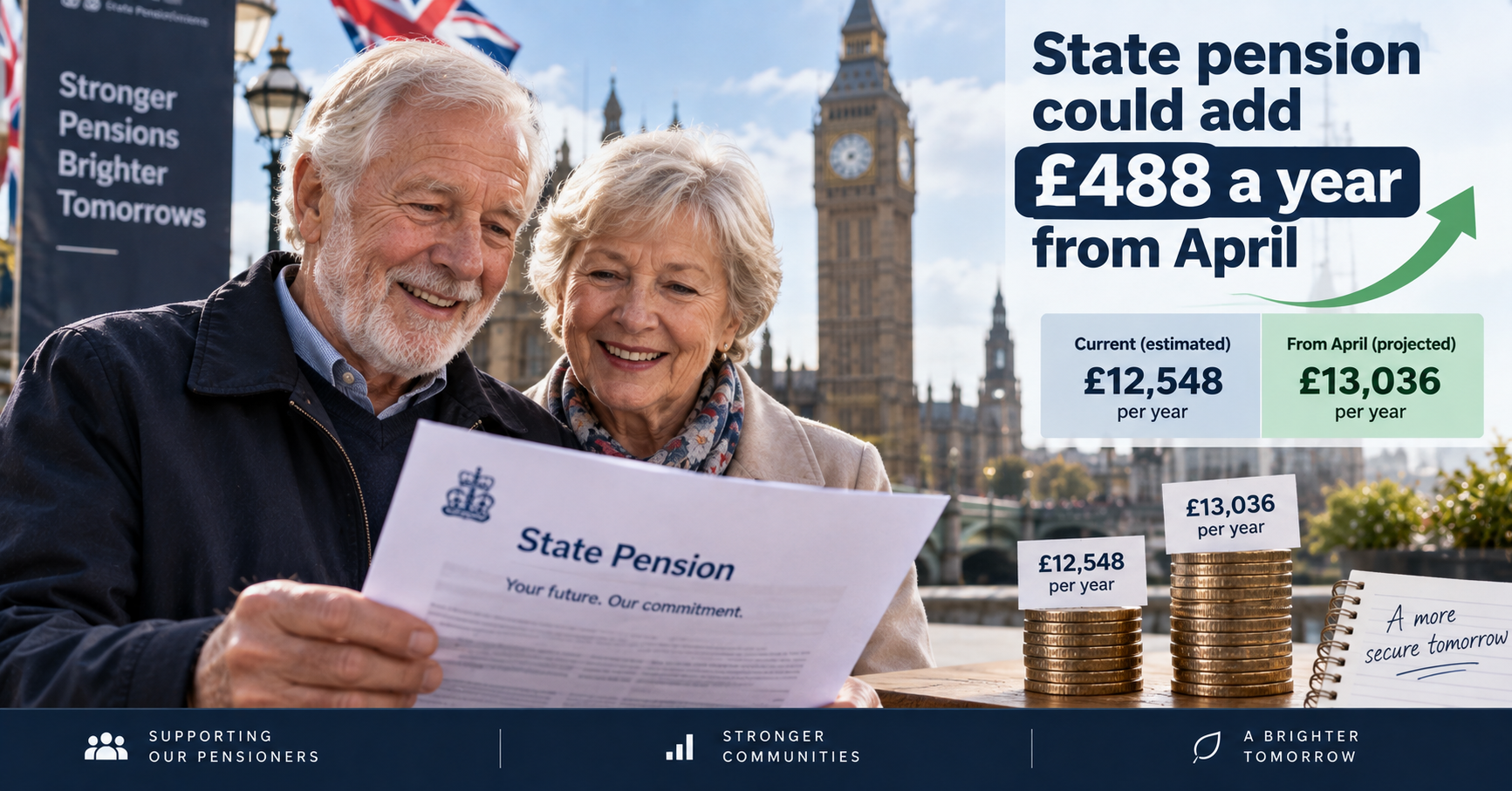
- The State pension could rise by £488 a year from April, reaching £13,036.40 for the full flat-rate payment.
- The projected 3.9% increase is based on earnings growth and the triple lock, which uses the highest of earnings, inflation or 2.5%.
- The rise would take the full flat-rate pension above the £12,570 personal allowance, creating potential income tax implications.
- The increase remains provisional until September inflation data are published next month.
- Economists have warned that repeated triple-lock increases could add long-term fiscal pressure as the pensioner population grows.
New earnings data indicate that the State pension could increase by £488 annually in April, taking the full flat-rate payment to £13,036.40 a year if the current figure determines the triple-lock uplift.
Projected Pension Increase
The prospective rise is tied to the triple lock, which sets annual pension increases using the highest of earnings growth, inflation or 2.5%.
How the Triple Lock Began
Introduced in 2012 in response to rates of pensioner poverty, the triple lock is intended to protect the value of pension payments. Under its formula, the largest of the three measures is used for the yearly adjustment.
Current Payment Estimates
Average wage growth, including bonuses, was 3.9% across May and July, according to the Office for National Statistics. On that basis, the flat-rate pension for people reaching pension age after April 2016 would rise to £250.70 a week, or £13,036.40 annually. The £488 increase would apply to that rate.
Impact on Recipients
Nearly 13 million people in the UK receive the State pension. A 3.9% increase would put the flat-rate amount above the £12,570 personal allowance, meaning it would be subject to income tax.
Economic Data and Government Position
The pay figures point to earnings as the leading triple-lock measure at present, although the final decision awaits a further inflation reading.
Inflation and Labour Market Signals
Inflation stands at 2.9% and is not expected to exceed the wages figure. Separate labour-force figures showed unemployment unchanged at 4.9%, while both vacancies and the number of employees on payrolls declined in recent months.
Tax Administration Pledge
The Labour government has previously said pensioners relying only on the State pension would not have to file a tax return and would not be pursued for payment.
Debate Over the Policy
The projected increase has renewed attention on the long-term cost of the triple lock as the pensioner population is expected to grow.
Public Discussion
No specific social-media reaction was set out, but the issue has been framed around whether the prospective increase is too high or insufficient, with readers invited to share their experiences.
Expert Assessments
Economists and policy researchers have highlighted concerns about affordability and the wider fiscal consequences of repeated increases.
Living-Standards Protection
The policy was created to address pensioner poverty, providing a mechanism for pension payments to rise by at least the strongest of earnings, prices or 2.5%.
Affordability Concerns
Resolution Foundation chief executive Ruth Curtice described a “ratchet effect” in which pensioners’ living standards rise faster than those of a typical worker. She said pensions could not simply outpace earnings because earnings form a major part of the tax base.
Long-Term Fiscal Pressure
Curtice said pensioners’ living standards had grown three times more than those of typical workers over the past 20 years. Liam McLaughlin, an associate economist at the National Institute of Economic and Social Research, said the increase adds “fiscal pressure at a time when the triple lock is already under scrutiny”.
Confirmation Due Next Month
The estimated payment levels remain provisional until the relevant inflation data are available.
Final Uplift Decision
The increase for next year will not be confirmed until September inflation is published next month. If the 3.9% earnings measure remains the highest figure, the old basic pension for those reaching pension age before April 2016 would be £192.10 a week, or £9,989.20 a year, an increase of £374.40.
Figures to Follow
The September inflation release will determine whether wages remain the decisive triple-lock benchmark. Attention will also remain on tax implications for recipients and on the costs associated with a growing number of pensioners.
Based on reporting from the original report.
Frequently Asked Questions
What started the projected State pension increase?
The projected increase is linked to the triple lock, which was introduced in 2012 to help protect pensioners from poverty. It raises payments by whichever is highest among earnings growth, inflation or 2.5%.
Why is the State pension increase attracting attention?
The potential £488 annual rise could take the full flat-rate payment to £13,036.40, above the £12,570 personal allowance. The projection has also revived debate about the long-term cost and affordability of the triple lock.
What are the latest updates on the pension increase?
Average wage growth, including bonuses, was 3.9% across May and July, making earnings the leading triple-lock measure so far. The figures remain provisional because the September inflation reading has not yet been published.
What could happen next with the State pension?
The final uplift will be confirmed after September inflation is released next month. If the 3.9% earnings figure remains the highest measure, the full flat-rate payment would be £250.70 a week, while the old basic pension would rise to £192.10 a week.